
winter self-care

20 Winter Self-Care Ideas to Soothe and Recharge

It’s the season for hot cocoa, cozy sweaters, and fireside chats. But winter can also be a time when life becomes more hectic: family holidays, extra errands to run, and tasks to check off our schedules before the new year arrives. In all the winter hustle and bustle it can be easy to forget the importance of self-care.

Woman in a winter snow scene

So if you’re feeling like you could use some nurturing of your soul during these colder days, take some time to read on!

Here are 20 simple yet powerful self-care practices to help you embrace the season.  So grab a blanket, pour yourself something warm to drink, and get ready to replenish your spirit.

My posts may contain affiliate links. If you purchase through one of these links, you will not pay a penny more, but I will receive a small commission. Please read my disclaimer for more information.

Embrace Winter With These Self-Care Ideas

1. Warm Beverage and Book Time

Enjoy a warm cup of hot chocolate, herbal tea, and a delicious treat while snuggling up with a cozy blanket and a good book. This is the perfect recipe for winter self-care.

2. Relax In A Warm Bath

Take soothing baths with aromatic bath salts or essential oils to help you unwind and alleviate muscle tension.

Related Post: Self-Care Bath Ideas To Create The Perfect At-Home Spa Experience

3. Practice Meditation and Mindfulness This Winter for Self-Care

Use the peacefulness of winter to cultivate a regular meditation or mindfulness practice. Taking a few minutes each day to center yourself can reduce stress, increase awareness, and improve overall well-being.

Related Post: What is Mindfulness? How to Get Started & Enhance Your Midlife Well-Being

Woman kneeling in the snow/winter self-care

4. Spa Night at Home

Enjoy the winter season with simple self-care treats like face masks and body scrubs that pamper your skin and help you relax.

Related Post: Healthy Appearing Winter Skin Is Achievable With These Tips

5. Winter Walks in Nature for Self-Care

Explore your neighborhood or nearby parks with a camera in hand. Capture the beauty of winter landscapes and the unique elements that the season brings.

6. Warm and Nourishing Meals

Initiate a delightfully delicious journey of winter self-care through the art of cooking. Indulge in the joy of discovering new recipes and preparing hearty, nourishing meals that will not only warm your body but also nourish your soul.

7. Hygge Rituals

Embrace the Danish concept of hygge by incorporating cozy rituals into your daily life. Light candles, snuggle up with soft blankets and savor comfort foods to create a warm and welcoming environment.

8. Nurturing Your Inner Artist: Winter Self-Care Through Creativity

Explore creative activities like painting, knitting, or journaling to express yourself and boost your creativity.

9. Indoor Exercise and Yoga

Prioritize your well-being with winter self-care by engaging in gentle stretching and yoga exercises. Embrace the importance of keeping your body flexible and easing away any tension or stiffness that may arise during the colder months.

10. Winter Self-Care: Embrace a Digital Detox Day

Engage in a digital detox and disconnect from social media for a day or weekend to recharge and focus on yourself.

11. Try Something New

Learn a new skill or hobby, such as playing a musical instrument, cooking, or photography, to stimulate your mind.

12. Movie Night

Host a virtual or in-person movie night with friends or family, complete with cozy blankets and your favorite snacks.

13. Winter Refresh: Self-Care and Hydration

Drink plenty of water and herbal teas which can also help keep your skin moisturized during the dry winter months.

Related Post: Healthy Appearing Winter Skin Is Achievable With These Tips

Improve your hydration routine by trying infused hot water beverages. Create delicious concoctions by adding slices of citrus fruits like oranges, lemons, or a hint of refreshing cucumber to warm water. For a soothing and aromatic twist, experiment with fresh herbs like mint or rosemary.

14. Boost Your Immunity

Keep your immune system strong by eating nourishing foods rich in vitamins and minerals, such as fruits, vegetables, and whole grains.

15. Stay Active

Embrace the winter season with self-care with sports activities such as ice skating, skiing, or snowboarding.

16. Winter Self-Care Getaway

Plan a weekend getaway to a cozy cabin in the mountains, where you can relax, unwind, and enjoy the winter scenery.

winter self-care getaway

17. Practice Self-Reflection

Engage in self-reflection by journaling or practicing gratitude, focusing on positive aspects of your life, and setting goals for the future.

Related Post: Top 10 Benefits of Journaling for Mental Health: How Can It Help You?

18. Connect With Loved Ones

Organize virtual or in-person gatherings, share meals, or have meaningful conversations.

Related Post: Social Self-Care Examples You Must Know To Help Level Up Your Routine

19. Winter Astronomy

On clear winter nights, go outside and look at the stars. Stargazing is a relaxing and amazing way to feel connected to the beauty of the universe.

20. Practice Gratitude

Carve out a precious few minutes each day to indulge in the practice of gratitude.

With a heart full of appreciation, reflect on the blessings that surround you, from the warmth of your home to the company of loved ones. This simple yet profound act of winter self-care nurtures your mind and soul, allowing you to find joy and peace amidst the cold embrace of the season.

Anchor Your Winter Self-Care

Want a simple way to choose the self-care ideas that matter most to you? Grab this printable Self-Care Planner and gently map out the practices that feel supportive right now. It’s perfect for midlife women looking for calm, clarity, and a little self-care anchor.

Get your Self-Care Planner here!

Daily/Weekly Self-Care Planner

Winter Self-Care Recap

Taking time for self-care during the winter doesn’t have to be expensive. Instead, it can be as simple as lighting a candle or going on a walk with a friend, which are both activities that take minimal effort and can still provide immense joy.

With these winter self-care ideas, you can cultivate a sense of calmness and contentment within yourself while embracing the cold and dark days of winter.

So grab your fuzzy socks and some hot cocoa and enjoy all that this wonderful season has to offer!

Which of the winter self-care ideas are you most anxious to try?

Other Posts You May Enjoy:

Calm morning scene with coffee, journal, and sunlight representing a mindful morning routine for a peaceful start to the day

Mindful Morning Routine Ideas for a Calmer, More Intentional Day

Do your mornings feel rushed, stressful, or focused on everyone else before yourself? You are not alone. Many women, especially during midlife, wake up already feeling behind. Between busy schedules, family responsibilities, changing energy levels, poor sleep, and endless to-do lists, mornings can quickly become overwhelming. That is exactly why creating a mindful morning routine can be so powerful.

A mindful morning routine helps you begin your day with more peace, intention, and self-care instead of immediately reacting to stress. And the best part is you do not need a perfect two-hour morning routine or a 5 a.m. wake-up call to experience the benefits.

Even a few small, intentional habits can help you feel calmer, more grounded, and better prepared for the day ahead.

In this post, you will discover:

✔️ The benefits of a mindful morning routine
✔️ Simple ways to create a peaceful morning without overwhelm
✔️ 10 mindful morning routine ideas to try
✔️ A realistic sample morning routine for busy women
✔️ Common habits that may be increasing morning stress

My posts may contain affiliate links. If you purchase through one of these links, you will not pay a penny more, but I will receive a small commission. Please read my disclaimer for more information.

What is a Mindful Morning Routine?

A mindful morning routine is the practice of starting your day with intention, awareness, and self-care rather than rushing straight into stress, distractions, or responsibilities.

Instead of immediately checking your phone, worrying about your schedule, or multitasking before you are fully awake, mindfulness encourages you to slow down and be present in the moment.

Your routine does not need to be complicated to make a difference. A mindful morning routine can be as simple as:

  • Taking a few deep breaths before getting out of bed
  • Stretching your body
  • Drinking water slowly and intentionally
  • Journaling or practicing gratitude
  • Enjoying your morning coffee without distractions
  • Setting a positive intention for the day

These small habits can create a calmer and more balanced start to your mornings.

Why a Mindful Morning Routine Matters

Creating a mindful morning routine can support your mental, emotional, and physical well-being in so many ways, especially during stressful seasons of life.

Some of the benefits include:

  • Reducing stress and anxiety
  • Helping you feel more emotionally grounded
  • Improving focus and productivity
  • Supporting a more positive mindset
  • Encouraging healthier habits
  • Creating space for self-care
  • Helping you feel more present throughout the day

Many women in midlife also find that slowing down in the morning helps them better manage overwhelm, burnout, and fluctuating energy levels.

Related Post: What is Mindfulness? How to Get Started & Enhance Your Midlife Well-Being

How to Start a Mindful Morning Routine Without Feeling Overwhelmed

One of the biggest mistakes people make is trying to completely overhaul their mornings overnight.

You do not need an elaborate routine to create a peaceful start to your day.

Start small.

Choose one or two mindful habits that feel realistic for your current season of life. Once those become part of your routine, you can slowly add more if you want to.

Remember, consistency matters far more than perfection.

Even five intentional minutes in the morning can positively impact your entire day.

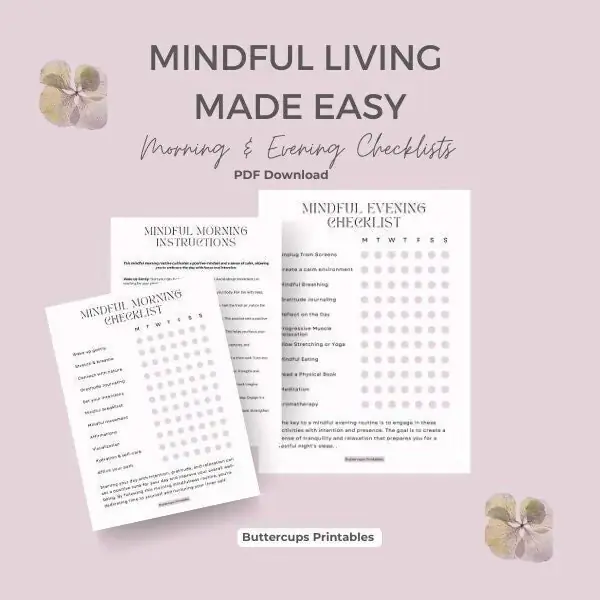
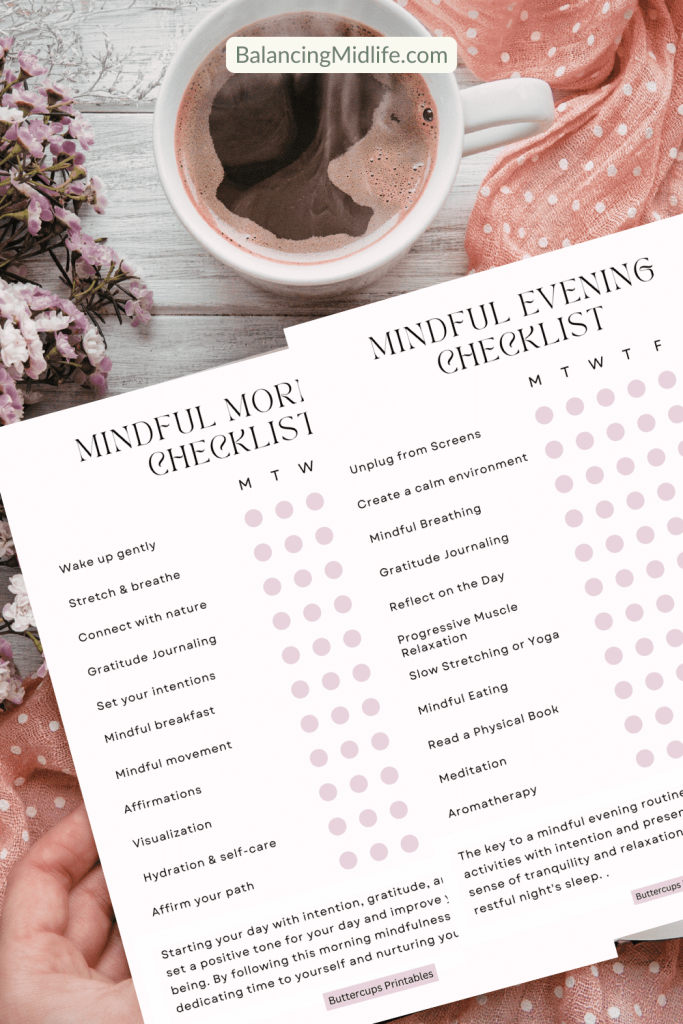
If you would like a simple way to stay consistent with your routines, I created a Mindful Morning & Evening Routine Printable Bundle designed to help women build calmer daily habits with less overwhelm.

The printable includes gentle morning and evening checklists, simple self-care prompts, and supportive routines to help you create a slower, more intentional rhythm to your day.

You can find the printable bundle here.

mindful morning and evening routine checklist printable

10 Mindful Morning Routine Ideas to Try

1. Wake Up Gently

Instead of jolting yourself awake and immediately rushing into the day, give yourself a moment to pause.

Take a few slow breaths before getting out of bed. Open the curtains. Stretch your body. Allow yourself to wake up gradually whenever possible.

If loud alarms leave you feeling anxious, you may also want to try calming music or a softer alarm sound.

alarm clock morning mindful routine
Photo by Ruslan Sikunov on Unsplash

2. Stretch and Take Deep Breaths

A few simple stretches in the morning can help release stiffness, improve circulation, and gently wake up your body.

As you stretch, focus on your breathing.

Inhale slowly through your nose. Exhale tension and stress.

This small habit can help you feel more centered before the demands of the day begin.

woman stretching as part of a mindful morning routine
Photo by Margaret Young on Unsplash

3. Practice Gratitude Journaling

Before reaching for your phone or diving into your to-do list, spend a few quiet moments reflecting on what you are grateful for.

Write down three simple things you appreciate.

They do not have to be big things. Sometimes gratitude looks like:

  • A warm cup of coffee or tea
  • A peaceful sunrise
  • A good night’s sleep
  • A supportive friend
  • A quiet moment before the house wakes up

This simple practice can help shift your mindset toward positivity and abundance.

Related Post: The Surprising Ways Gratitude Journaling Benefits Your Midlife Mind And Mood

4. Set a Positive Intention for the Day

Instead of starting your day feeling reactive, choose how you want to show up.

Ask yourself:

  • How do I want to feel today?
  • What kind of energy do I want to bring into my day?

You may choose a simple intention like:

  • Calm
  • Patience
  • Joy
  • Focus
  • Gratitude

Having an intention can help guide your mindset throughout the day.

5. Enjoy A Mindful Breakfast

How often do we eat breakfast while scrolling through our phones or mentally planning everything we need to do?

Try slowing down during your morning meal.

Notice the flavors, textures, and warmth of your food or drink. Even a few mindful moments can help you feel more grounded and present.

Mindful eating is also a beautiful form of self-care.

breakfast and flowers representing mindful eating
Photo by freestocks on Unsplash

6. Add Gentle Movement to Your Morning

Movement does not have to mean an intense workout.

A mindful morning routine could include:

  • Yoga
  • Stretching
  • A short walk
  • Tai chi
  • Light strength exercises
  • Dancing in the kitchen while making coffee

The goal is simply to reconnect with your body and wake it up with intention.

Many women in midlife find that gentle movement in the morning helps improve mood, reduce stiffness, and boost energy naturally.

7. Repeat Positive Affirmations

The way we speak to ourselves matters.

Try beginning your day with a few encouraging affirmations such as:

  • I am capable of handling today with grace.
  • I deserve peace and balance.
  • I am allowed to prioritize my well-being.
  • I trust myself.
  • I am growing stronger every day.

At first, affirmations may feel a little awkward, and that is okay. Over time, they can help shift negative thought patterns and encourage a more compassionate mindset.

Related Post: Positive Affirmations For Anxiety And Depression: How Can They Help?

8. Try a Simple Visualization Exercise

Take one quiet minute to picture your day unfolding calmly and smoothly.

Visualize yourself handling challenges with patience and confidence. Imagine yourself feeling calm, productive, and balanced.

This practice can help reduce anxious thoughts and create a more positive mindset before the day begins.

woman sitting outside in the sunlight enjoying a mindful moment
Photo by Raphael Nast on Unsplash

9. Hydrate Before Reaching for Your Phone

One mindful habit that can make a surprisingly big difference is drinking water before immediately checking notifications or social media.

Starting your morning with hydration helps support your energy levels and overall well-being.

It also creates a small pause before outside noise and distractions take over your attention.

10. Create a Small Morning Self-Care Ritual

Self-care does not have to be elaborate.

Your morning ritual might include:

  • Skincare
  • Reading a devotional
  • Sipping tea quietly
  • Listening to calming music
  • Sitting outside for fresh air
  • Diffusing essential oils

These little moments of care can help you feel more grounded, especially during busy or stressful seasons of life.

Related Post: Self-Care Tips For Women:  Are You Really Taking Care Of Yourself?

woman enjoying self-care time as part of a mindful morning routine
Photo by Toa Heftiba on Unsplash

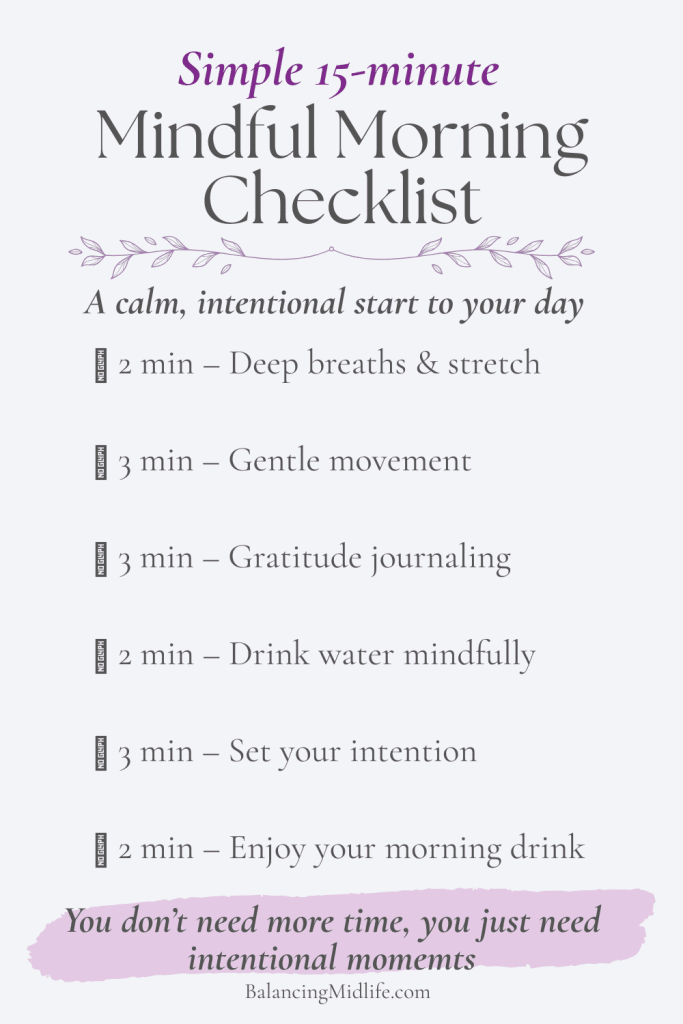
A Simple 15-Minute Mindful Morning Routine for Busy Women

If you are not sure where to start, here is a realistic example of a simple mindful morning routine:

TimeActivity
2 minutesDeep breathing and stretching
3 minutesGratitude journaling
2 minutesDrink water mindfully
3 minutesGentle movement or walking
2 minutesSet an intention for the day
3 minutesEnjoy coffee or tea without distractions

Remember, your routine should support your life, not stress you out even more.

Save this simple mindful morning routine checklist for later, or grab the printable Mindful Morning & Evening Routine Bundle to help you create calmer daily habits with ease.

mindful morning routine checklist

Common Morning Habits That May Be Increasing Stress

Sometimes creating a calmer morning is less about adding more and more about removing habits that drain your energy.

Here are a few common habits that can increase stress levels:

  • Checking social media immediately after waking up
  • Hitting snooze repeatedly
  • Skipping breakfast
  • Multitasking first thing in the morning
  • Starting work before taking care of yourself
  • Consuming negative news right away

Small changes can have a surprisingly powerful impact over time.

Frequently Asked Questions About a Mindful Morning Routine

What is the best mindful morning routine?

The best mindful morning routine is one that feels realistic and supportive for your lifestyle. It does not need to be complicated. Even a few minutes of intentional habits can help you start the day feeling calmer and more focused.

How long should a mindful morning routine be?

Your routine can be as short as 5 to 15 minutes. Consistency is more important than length.

Can mindfulness help reduce morning anxiety?

Yes. Mindfulness practices such as deep breathing, journaling, stretching, and setting intentions may help calm anxious thoughts and create a more grounded start to the day.

What are simple mindfulness practices for beginners?

Some beginner-friendly mindfulness practices include:

  • Deep breathing
  • Gratitude journaling
  • Gentle stretching
  • Mindful eating
  • Positive affirmations
  • Visualization
  • Taking a quiet walk

Final Thoughts on Creating a Mindful Morning Routine

In a world that constantly encourages busyness, creating a mindful morning routine is a beautiful way to slow down and reconnect with yourself.

Your mornings do not need to look perfect to be meaningful.

Even a few intentional moments can help you feel calmer, more balanced, and more prepared for the day ahead.

Start small. Give yourself grace. And remember that caring for yourself is not selfish. It is necessary.

Are You Ready to Create Your Own Mindful Morning Routine?

Choose one or two mindful habits from this list and try them tomorrow morning.

You may be surprised how much a slower, more intentional start can change the way you feel throughout the day.

If you are ready to create calmer mornings and more peaceful evenings, my Mindful Morning & Evening Routine Printable Bundle can help you build simple daily habits that feel supportive instead of overwhelming.

It is designed especially for women seeking a slower, more intentional approach to self-care and daily living.

mindful morning and evening routine checklist

I would love to hear from you. What mindful morning habits help you feel more peaceful and grounded? Share your favorite practices in the comments below.

If you enjoyed this blog post, don’t forget to subscribe to our blog for more inspiring ideas and tips. You can also follow us on PinterestFacebookInstagram, and Flipboard.

Want even more inspiration? Check out these related posts:

Short on time? Pin this post for later!

woman stretching as part of a mindful morning routine

Woman in midlife enjoying a peaceful morning as she celebrates International Self-Care Day with a relaxing self-care routine.

How to Celebrate International Self-Care Day With Simple Midlife Self-Care Ideas

Every July, when International Self-Care Day comes around, it reminds me to pause for a minute and ask myself a simple question:

How have I really been taking care of myself lately?

Sometimes I like the answer, and sometimes I realize I’ve been so focused on everything and everyone else that my own needs have quietly fallen to the bottom of the list again.

My posts may contain affiliate links. If you purchase through one of these links, you will not pay a penny more, but I will receive a small commission. Please read my disclaimer for more information.

What is International Self-Care Day?

International Self-Care Day is celebrated every year on July 24th as a reminder of the importance of making time for our health and well-being. Established by the International Self-Care Foundation in 2011, this day helps raise awareness about the role caring for yourself plays in our everyday lives.

Each year, a different theme is chosen to encourage people to reflect on their own well-being and discover ways to make self-care part of their daily routine.

For women in midlife, International Self-Care Day is a meaningful opportunity to pause, check in with yourself, and explore simple ideas that support your physical, emotional, and mental well-being.

Photo by Maddi Bazzocco on Unsplash

What Does Self-Care Really Mean in Midlife?

Self-care is often misunderstood as something expensive, time-consuming, or something we have to schedule perfectly. But in midlife, taking care of yourself is really about paying attention to what you need and making small choices that support your physical, emotional, and mental well-being.

Simple Self-Care Ideas for Busy Days in Midlife

With everything that fills our days, it’s easy to overlook the small moments that help us feel our best. But caring for yourself doesn’t always require a big time commitment. Sometimes it’s the simple, intentional choices we make throughout the day that help us feel more balanced, refreshed, and connected to ourselves.

Make Yourself a Priority Without Feeling Guilty

Many women spend years taking care of everyone else. Between family responsibilities, work, relationships, and everyday commitments, it’s easy to put your own needs at the bottom of the list.

Use International Self-Care Day as an opportunity to pause and ask yourself:

  • What do I need more of right now?
  • What has been taking too much of my energy?
  • What is one small change that would help me feel better?

Self-care is about recognizing that your own needs matter too. When you make time to support your health and well-being, you have more energy and presence for the people and responsibilities that are important to you.

Start small by setting a boundary, saying no to something that no longer fits your priorities, or creating a little more time for the things that help you feel your best. If you’re looking for more practical ways to prioritize yourself, take a look at my post on self-care tips for women for simple ideas you can incorporate into your everyday routine.

Support Your Body and Mind with Simple Self-Care Practices

Self-care in midlife often looks different from what it did years ago. Our bodies change, our energy levels shift, and the routines that once worked may need a little adjustment.

Celebrating International Self-Care Day can be as simple as choosing habits that support both your physical and emotional well-being, such as:

  • Taking a walk outdoors and enjoying fresh air
  • Moving your body in a way that feels good, whether that’s yoga, stretching, dancing, or strength training
  • Nourishing your body with foods that give you steady energy
  • Creating a relaxing bedtime routine to support better sleep
  • Taking a few extra minutes for a skincare routine that helps you care for your changing skin

Small habits done consistently can make a meaningful difference over time. If you’re interested in learning more about creating healthier routines, you may enjoy my post on healthy habits for women over 40.

Make Time for Connection and Meaningful Relationships

Connection is an important part of nurturing yourself, especially during midlife when friendships, family dynamics, and daily routines often change.

Celebrate International Self-Care Day by reaching out to someone who brings positivity into your life. Schedule coffee with a friend, call someone you haven’t talked to in a while, or make time for a conversation that leaves you feeling encouraged.

Self-care also means reconnecting with yourself. Quiet moments spent journaling, reflecting, or simply enjoying some uninterrupted time can help you better understand what you need in this season of life.

If you’d like more ideas for nurturing relationships and creating meaningful connections, read my blog post on Social Self-Care Examples to Boost Your Mental Well-Being.

Two midlife women spending time together and enjoying meaningful connection as part of social wellness.
Photo by Small Beer on Unsplash

Slow Down and Reflect on What Matters Most

Life can move quickly, and it’s easy to spend your days focused on what needs to get done without taking time to reflect.

International Self-Care Day is the perfect opportunity to slow down and check in with yourself. A few quiet moments of journaling or mindfulness can help you reconnect with your thoughts, your goals, and what truly matters to you.

Consider reflecting on questions like:

  • What brings me joy right now?
  • What am I grateful for?
  • What do I want to make more time for?
  • What areas of my life need more attention?

Practicing gratitude and mindfulness can help create calm and awareness in your everyday life. If you’d like to explore this further, you can learn more in my post What Is Mindfulness? A Simple Guide for Women in Midlife, or try these 75 Mindfulness Journal Prompts for Inner Peace, Self-Care, and Anxiety Relief.

Journal and coffee creating a quiet moment of reflection for midlife self-care and personal growth.
Photo by Jumah on Unsplash

Revisit Your Goals, Dreams, and Personal Growth

Midlife can be a beautiful time of reflection and rediscovery. As responsibilities shift, it’s worth taking time to think about what you want this next chapter of life to look like.

Ask yourself:

  • Is there something I’ve always wanted to try?
  • Are my current goals still meaningful to me?
  • What would make this season of life feel more fulfilling?

Personal growth doesn’t have to mean making major life changes. Sometimes it’s about learning something new, exploring a forgotten passion, improving your health, or creating more balance in your daily routine.

If you’re looking for inspiration, read more about How Personal Growth Goals Can Help You Rediscover Yourself in Midlife.

Small Self-Care Moments Count Too

One of the biggest misconceptions about self-care is that it requires a lot of time, money, or planning, but some of the most meaningful moments can be simple.

If you’re having a busy day, try adding one small moment that helps you slow down and reconnect with yourself:

  • Enjoy your morning coffee without distractions
  • Sit outside and enjoy a few quiet moments
  • Read a few pages of a book
  • Take a short walk
  • Turn off notifications for a little while
  • Write down a few things you’re grateful for
Photo by Brock Wegner on Unsplash

Small moments of care can have a meaningful impact. Sometimes the simplest choices are the ones that help you feel more balanced, refreshed, and connected to yourself.

If you’re ready to create a simple self-care routine, I created a free 3-Day Self-Care Reset to help you spend a few minutes each day reflecting on what you need and creating small habits that support your well-being.

Frequently Asked Questions About International Self-Care Day

When is International Self-Care Day?

This meaningful day celebrated every year on July 24th. It was established by the International Self-Care Foundation in 2011 as a reminder of the importance of making our health and well-being a priority.

For women in midlife, it’s a great opportunity to pause, reflect on what you need, and consider small ways to better support yourself physically, emotionally, and mentally.

Why is International Self-Care Day important for women in midlife?

Midlife is often a season of change. Many women are navigating shifting priorities, changing family dynamics, career transitions, and new routines. It can be easy to focus so much on caring for others that your own needs move to the background.

This occassion offers a simple reminder to check in with yourself and make choices that support your overall well-being. This may look different for everyone, whether it’s improving daily habits, spending time with people who matter, creating healthier boundaries, or simply making more time for things that bring you joy.

How can I celebrate International Self-Care Day?

There are many simple ways to celebrate this special day. You might spend time outdoors, enjoy a quiet morning, practice gratitude, journal, connect with a friend, move your body, or create a relaxing skincare routine.

The most meaningful ways to honor yourself are often the ones that fit naturally into your life and support what you need most right now.

What are some easy self-care ideas for busy women in midlife?

When life feels full, small moments of care can make a meaningful difference. Some simple ideas include:

  • Taking a walk outside
  • Reading a few pages of a book
  • Enjoying your morning coffee without distractions
  • Writing in a journal
  • Creating a calming evening routine
  • Taking a few minutes to stretch or breathe deeply
  • Spending time doing something you enjoy

Small, consistent choices can help you feel more balanced and connected to yourself.

How can I start a self-care routine?

The best place to start is by paying attention to what you need most. Consider what areas of your life could use more support, whether that’s rest, movement, connection, mindfulness, or personal time.

Start with one small habit that feels realistic and build from there. A wellness routine doesn’t need to be complicated or time-consuming to make a difference.

If you’d like a little guidance getting started, my free 3-Day Self-Care Reset can help you take a few minutes each day to reflect, reconnect with yourself, and create intentional habits that support your well-being.

What is the theme for International Self-Care Day?

The International Self-Care Foundation introduces a different theme each year to highlight the importance of self-care and encourage people to make their well-being a priority. Each theme focuses on ways individuals can better understand and practice it in their daily lives.

Final Thoughts

International Self-Care Day is a wonderful reminder that caring for yourself isn’t selfish. It’s about creating space for the things that help you feel your best so you can continue showing up for the people and responsibilities that matter to you.

Whether you celebrate with a quiet morning, a walk outside, time with a friend, or simply a few minutes to reflect, remember that small moments of creating space for yourself can make a meaningful difference.

How will you celebrate International Self-Care Day this year?

Other Posts You May Enjoy

Save these International Self-Care Day Ideas for later!

International Self-Care Day ideas for women in midlife
tea, journal, and a cozy blanket for emotional self-care, calm and balance

30 Emotional Self-Care Examples to Feel More Calm, Balanced, and Supported

Have you ever reached the end of the day feeling emotionally exhausted, even when you technically “got everything done”? These emotional self-care examples can help when life feels emotionally draining, and you’ve been putting everyone else’s needs ahead of your own. Between work, family responsibilities, relationships, stress, and the constant mental load so many women carry, emotional self-care often becomes the last thing we make time for.

We push through.  We keep going. We tell ourselves we’ll rest later.

Eventually, our emotional well-being starts asking for attention.

Emotional self-care is an important part of supporting your mental and emotional health, especially during stressful or overwhelming seasons of life.

And thankfully, emotional self-care does not have to be complicated. Small, intentional habits can make a meaningful difference in how you feel day to day.

These emotional self-care examples will help you feel calmer, more grounded, and more connected to yourself again.

woman reflecting quietly as an emotional self-care example
Photo by Tanya Trukyr on Unsplash

My posts may contain affiliate links. If you purchase through one of these links, you will not pay a penny more, but I will receive a small commission. Please read my disclaimer for more information.

What Is Emotional Self-Care?

Emotional self-care means taking care of your emotional well-being by paying attention to your feelings, stress levels, and mental needs.

It’s about allowing yourself to slow down, process emotions, set boundaries, and create space for things that bring peace, comfort, and joy.

Some emotional self-care practices are simple, like taking a quiet walk or journaling for a few minutes. Others may involve deeper healing, like learning to set healthy boundaries or practicing self-compassion.

No matter what emotional self-care looks like for you, it all comes back to caring for yourself in a kind and supportive way.

If you’ve been feeling emotionally drained lately, creating small daily habits can really help. These simple self-care tips for women are a great place to start when you want to feel more balanced and supported again.

Signs You May Need More Emotional Self-Care in Your Daily Life

Sometimes we don’t even realize how emotionally drained we’ve become until our minds and bodies start telling us.

Here are a few signs you may need more emotional self-care in your life:

  • Feeling overwhelmed or emotionally exhausted
  • Becoming easily irritated or impatient
  • Constant stress or anxiety
  • Difficulty relaxing
  • Feeling disconnected from yourself
  • Trouble sleeping or shutting your mind off
  • Feeling emotionally numb
  • Losing motivation or joy in everyday life

If any of these sound familiar, you are definitely not alone.

Even adding one or two small emotional self-care habits into your routine can help you feel more balanced and supported.

Emotional Self-Care Benefits for Your Mental and Emotional Well-Being

Taking care of your emotional health can positively affect every area of your life.

Some of the biggest emotional self-care benefits include:

  • Reduced stress and anxiety
  • Improved self-awareness
  • Better relationships
  • Increased resilience during difficult seasons
  • Improved focus and productivity
  • More self-compassion and confidence
  • Greater sense of calm and inner peace

When we take care of our emotional well-being, we are often better able to care for everything and everyone else, too.

Feeling Overwhelmed and Not Sure Where to Start?

If you’ve been craving a little more balance, peace, and time for yourself, my 3-Day Self-Care Reset is a gentle step toward feeling more connected to yourself again.  Inside, you’ll find realistic self-care ideas designed to help you slow down, recharge, and feel more supported without adding more pressure to your day. You can grab the FREE Self-Care Reset here.

Emotional Self-Care Examples for Relaxation and Stress Relief

1. Practice Mindfulness Meditation for Emotional Self-Care

Mindfulness helps bring your attention back to the present moment instead of getting stuck in stress, worry, or overthinking. Even five quiet minutes can help calm your nervous system.  Learning how mindfulness can improve emotional well-being can help you feel calmer and more present during stressful seasons of life.

2. Take a Soothing Bath

A warm bath with candles, calming music, or essential oils can feel incredibly comforting after a stressful day. Sometimes emotional self-care looks as simple as giving yourself permission to slow down.

If you enjoy relaxing evening routines, these relaxing self-care ideas for stressful days can help you create a peaceful at-home reset.

Relaxing bath setup with candles and soft lighting for emotional self-care and stress relief
Photo by Brooke Lark on Unsplash

3. Listen to Calming Music

Music can completely shift your mood. Create a playlist that helps you feel relaxed, encouraged, or emotionally grounded.

4. Practice Deep Breathing

Deep breathing is one of the easiest ways to reduce stress in the moment. It helps calm anxious thoughts and creates a sense of emotional balance.

5. Create a Cozy Space at Home

Your environment affects your emotional well-being more than you may realize. Soft blankets, warm lighting, candles, and peaceful spaces can help create a sense of comfort and calm.

6. Spend Time in Nature

A simple walk outside can do wonders for your emotional health. Fresh air, sunshine, and nature often help us feel lighter and more emotionally refreshed.

Spending time outside can also be a wonderful addition to a mindful morning routine for a calmer start to the day.

7. Emotional Self-Care Example: Take Breaks From Technology

Constant notifications and screen time can leave us feeling mentally and emotionally drained. Even short breaks from technology can help you feel more present and peaceful.

8. Try Yoga or Gentle Stretching

Gentle movement can help release emotional tension while calming both the mind and body.

Emotional Self-Care Examples for Self-Reflection and Personal Growth

9. Journal Your Thoughts and Feelings

Journaling gives you a safe space to process emotions, reflect on your thoughts, and release mental clutter.

These benefits of journaling for emotional health may inspire you to make journaling part of your regular self-care routine.

10. Practice Gratitude

Writing down a few things you are grateful for can help shift your mindset, especially during stressful seasons.

11. Practice Self-Compassion

Talk to yourself the way you would talk to someone you love. Emotional self-care often starts with replacing self-criticism with kindness.

Learning ways to improve self-esteem and self-worth can also help strengthen your emotional well-being over time.

12. Explore Creative Outlets

Painting, writing, crafting, or dancing can help you express emotions and reconnect with yourself in meaningful ways.

13. Practice Forgiveness

Holding onto resentment can feel emotionally exhausting. Forgiveness doesn’t mean excusing hurtful behavior, but it can help release emotional weight.

14. Reflect on Your Emotions

Instead of pushing your feelings aside, try asking yourself what you truly need in this season of life.

15. Practice Visualization

Visualization exercises can help create a sense of hope, calm, and encouragement by focusing on positive outcomes and emotions.

Emotional Self-Care Examples for Connection and Support

16. Emotional Self-Care Practice: Spend Time With Loved Ones

Meaningful conversations and supportive relationships can help you feel emotionally connected and encouraged.

17. Spend Time With Pets

Animals have a special way of bringing comfort, joy, and emotional support during difficult days.

18. Seek Support From a Therapist or Counselor

Sometimes emotional self-care means asking for help. Talking with a trusted professional can provide support, clarity, and healing.

19. Practice Random Acts of Kindness

Helping someone else can boost your mood and create a deeper sense of connection and purpose.

20. Set Healthy Boundaries

Protecting your emotional energy is important. Boundaries help create healthier relationships and prevent emotional burnout.

If stress has been taking a toll on your emotional health, these simple ways to manage stress naturally may help you feel more balanced and supported.

Emotional Self-Care Examples to Bring More Joy Into Your Life

21. Find a Hobby You Enjoy

Making time for hobbies reminds you that life is not only about responsibilities and to-do lists.

22. Watch Something That Makes You Laugh

Laughter can help lighten emotional heaviness and reduce stress.

23. Take Yourself on a Date

Enjoy a coffee shop, bookstore trip, lunch, or quiet outing by yourself. Learning to enjoy your own company is a beautiful form of emotional self-care.

24. Spend Time Alone

Quiet time alone can help you recharge emotionally and reconnect with yourself.

cozy home environment for emotional self-care and rest during overwhelming seasons
Photo by Laura Chouette on Unsplash

25. Create Simple Self-Care Rituals

Morning coffee routines, evening journaling, skincare, or quiet reading time can become comforting emotional anchors in your day.

Creating small daily rituals can make a big difference, especially during overwhelming seasons when life feels nonstop.

More Emotional Self-Care Examples to Support Your Well-Being

26. Practice Positive Self-Talk

The way you speak to yourself matters. Replacing harsh inner criticism with supportive and encouraging thoughts can make a big difference in your emotional well-being over time.

27. Allow Yourself to Rest Without Guilt

Rest is not something you need to earn. Giving yourself permission to slow down and recharge is an important part of emotional self-care.

28. Say No When You Need To

Protecting your time and emotional energy sometimes means saying no without guilt or overexplaining.

29. Celebrate Small Wins

Even small accomplishments deserve recognition. Celebrating little victories can help build confidence and encouragement during difficult seasons.

30. Give Yourself Grace During Hard Seasons

Some days are simply harder than others. Emotional self-care can look like lowering expectations, slowing down, and reminding yourself that you are doing the best you can.

Sometimes emotional self-care is not about doing more.  Sometimes it’s simply about being gentler with yourself.

How to Create an Emotional Self-Care Routine That Actually Works

You don’t need a perfect routine to care for your emotional well-being.

Start small.

Choose one or two emotional self-care practices that feel realistic for your current season of life. Maybe that means journaling for five minutes each morning or taking a short walk after dinner.

The goal is not perfection. The goal is consistency and self-awareness.

Small emotional self-care habits often lead to meaningful changes over time.

Emotional self-care does not have to be perfect or complicated. Sometimes the smallest habits end up making the biggest difference. If you’re looking for even more encouragement, these simple self-care ideas for women feeling overwhelmed can help you slow down and reconnect with yourself again.

If you’d like a simple way to stay consistent with your emotional self-care, having a gentle structure can really help. I created a Daily and Weekly Self-Care Planner, available in my Etsy shop, to support exactly this.

It’s designed to help you slow down, reflect, and stay more intentional with your time and energy without overcomplicating your routine. You can use it to set weekly intentions, track your daily self-care, and reflect on what’s going well each week.

It’s a supportive tool for those seasons when you want more structure, but still need things to feel calm and flexible.

Daily/Weekly Self-Care Planner

Final Thoughts on Emotional Self-Care

Taking care of your emotional well-being is one of the most important things you can do for yourself.

Life will always have stressful seasons, busy days, and overwhelming moments. Making space for emotional self-care can help you feel calmer, more grounded, and more supported through it all.

Start small. Be patient with yourself, and remember that caring for your emotional health truly matters.

If you’re looking for a simple place to begin, don’t forget to grab the 3-Day Self-Care Reset to help you gently reconnect with yourself one small step at a time.

Which of these emotional self-care examples speaks to you the most right now?

I’d love to hear in the comments how you are prioritizing emotional self-care in this season of life.

If you enjoyed this blog post, don’t forget to subscribe to our blog for more inspiring ideas and tips. You can also follow us on PinterestFacebookInstagram, and Flipboard.

Other Posts You May Enjoy

journal, flowers, coffee set up for practicing emotional self-care