
Woman sitting at a table in a comfortable home with a notebook and coffee, representing a simplify your life checklist with simple ways to make life easier.

Simplify Your Life Checklist: 40 Simple Ways to Make Life Easier and Less Overwhelming

What if you don’t need to organize your life better, but simply simplify it? This simplify your life checklist includes 40 practical ways to make everyday life easier, from your home and schedule to your spending, digital life, relationships, and expectations.

I’ve found that simplifying my life usually isn’t about making one big change. It’s noticing the little things that have gradually become more complicated than they need to be. A closet that’s too full, a calendar that’s too busy, too many emails, or commitments that no longer fit my life.

If you’ve been wondering how to simplify your life, start by looking at what creates the most friction in your everyday life. You don’t need to tackle all 40 ideas. Choose a few that would make the biggest difference and start there.

1. Simplify Your Life Checklist: Start With Your Home

Our homes can become complicated little by little. A few things come in, nothing goes out, and suddenly the closets are full, the counters are crowded, and finding what you need takes longer than it should.

I’ve learned that some of the hardest things to let go of aren’t necessarily the things I use. They’re the things that remind me of someone, somewhere, or a particular time in my life. That’s why I don’t think simplifying your home means getting rid of everything that doesn’t serve a practical purpose.

Simplifying your home isn’t about getting rid of everything you own. It’s about reducing clutter and making your home easier to live in.
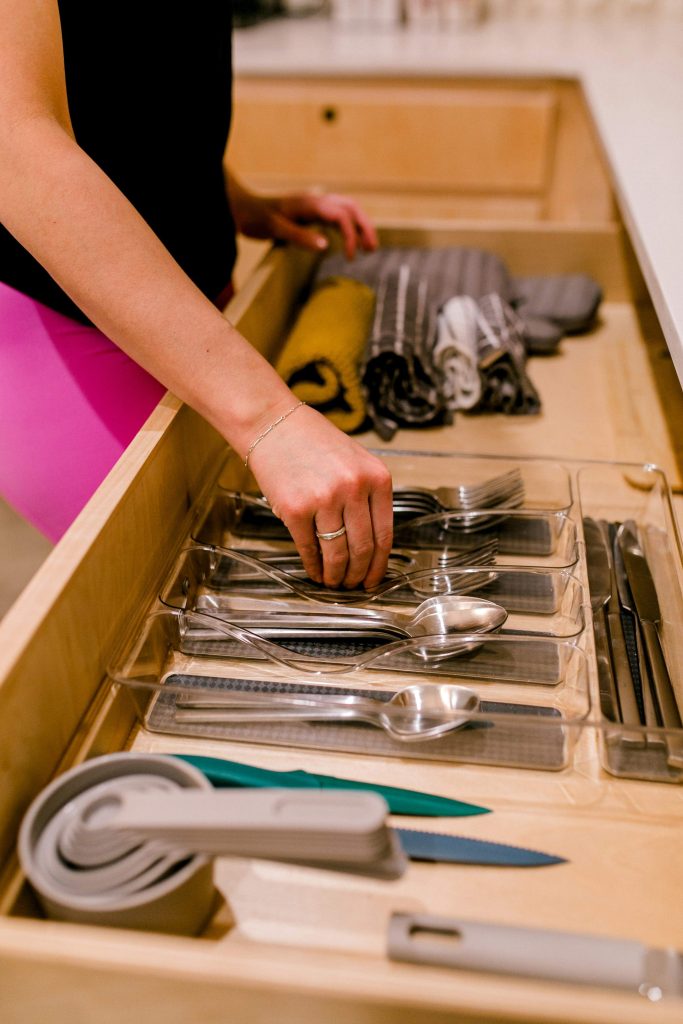
Woman organizing a small area of her home as part of simplifying and reducing clutter.
Photo by Cabri Caldwell on Unsplash

Simplify Your Life Checklist: Start With One Small Area In Your Home

You don’t need to spend an entire weekend decluttering your house.

Choose one drawer, cabinet, shelf, or corner and deal with that space. Once it’s done, you can decide whether to tackle another.

If you need help getting started, I share a simple approach in How to Declutter Your House in One Day.

Let go of things you’re keeping out of guilt

Some things are difficult to get rid of because they represent a person, a memory, or a particular time in your life.

But keeping something because you feel guilty about letting it go isn’t necessarily a good reason to keep it.

My post on how to declutter sentimental items walks through simple ways to make these decisions without feeling like you’re throwing away the memories themselves.

Shop your home before buying something new

Before buying another basket, kitchen gadget, picture frame, sweater, or decorative item, take a look at what you already have.

You may already own something that will work.

Make everyday items easier to access

The things you use all the time shouldn’t be buried behind things you rarely use.

Move everyday dishes, clothing, toiletries, kitchen supplies, and other frequently used items where you can easily reach them.

A little rearranging can save you time every single day.

Create a simple home reset routine

You don’t need to clean your entire house every evening.

Instead, decide what few things make the biggest difference to how your home feels. Maybe it’s clearing the kitchen counters, putting things back where they belong, or doing a quick living room tidy-up.

Keep the routine simple enough that you’ll actually do it.

2. Simplify Your Schedule and Make More Room

One of the easiest ways to simplify your daily life is to take a closer look at how you’re spending your time.

I’ve become much more aware of how quickly a week can fill up. It’s easy to look at an open space on the calendar and think, “I could fit something in there.” I’ve started looking at those open spaces differently. Sometimes leaving them empty is exactly what I need.

Simplifying your schedule isn’t about squeezing more into your day. It’s about creating a schedule that leaves room for the things that matter.

Stop automatically saying yes

You don’t have to answer every invitation or request immediately.

Try saying, “Let me check my calendar and get back to you.”

That gives you a chance to decide whether you actually have the time and whether you want to make the commitment.

Leave some white space on your calendar

Not every hour needs to have a purpose.

Leave some time open for errands that take longer than expected, an unexpected phone call, sitting with your coffee, reading, taking a walk, or simply doing nothing for a while.

A space on your calendar isn’t necessarily wasted time.

Photo by Covene on Unsplash

Batch similar tasks together

If you have several errands to run, try doing them on the same day.

The same idea works for phone calls, emails, household paperwork, meal preparation, or other tasks that tend to interrupt your day.

Grouping similar tasks can make your schedule feel less scattered.

Simplify your morning routine

Your morning doesn’t need to contain twelve different habits to be a good morning.

Look at what you’re currently doing and ask yourself what actually helps you start your day well.

If mornings tend to feel rushed, you may also enjoy these mindful morning routine ideas.

Choose a few priorities each day

A long to-do list can make everything seem equally important.

Instead, choose a few things that really need your attention that day. Everything else can move to another day if necessary.

Give yourself permission to do less

This may be one of the hardest ways to simplify your life.

There will always be another load of laundry, another email, another errand, another project, or another thing you could be doing.

You don’t have to finish everything before you sit down.

If you need ideas for finding more personal time in a busy schedule, take a look at How to Make Time for Yourself in Midlife.

3. Simplify Your Mental Load

Sometimes it’s not the amount of work that makes life feel complicated. It’s the number of things you’re constantly trying to remember.

Appointments. Grocery lists. Birthdays. Bills. School schedules. Household projects. Things you need to buy. Things you need to call someone about.

Getting some of those things out of your head can make a difference by using the simplify your life checklist.

Get everything out of your head

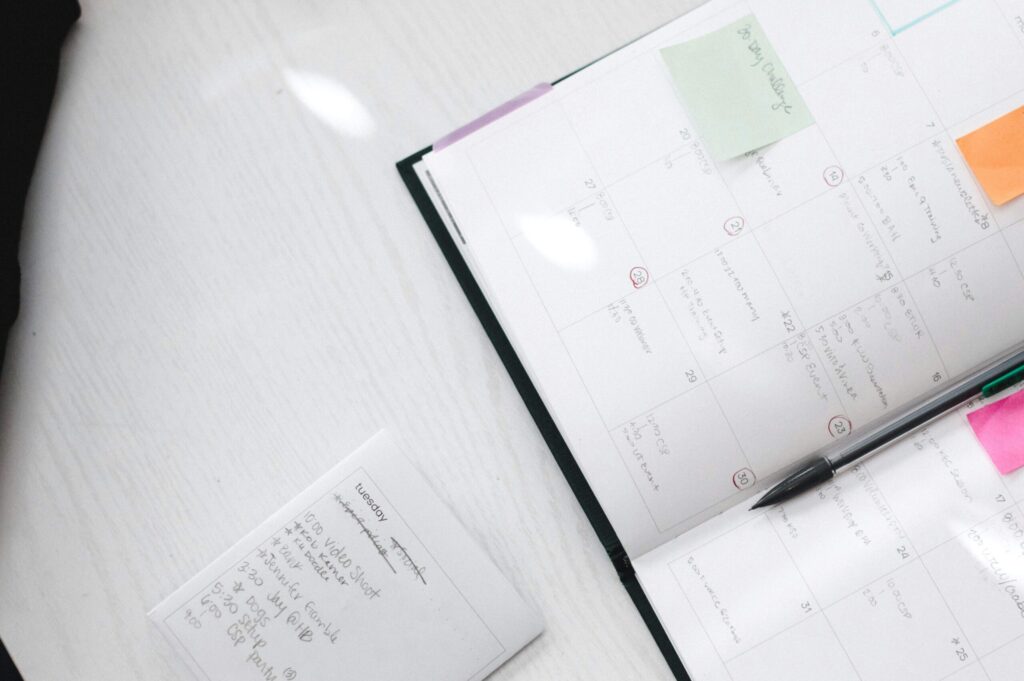
Take a few minutes and write down everything you’re trying to remember.

Don’t organize it yet. Just get it onto paper.

Once it’s in front of you, you can decide what actually needs to be done.

Choose one place for your lists

If your grocery list is on your phone, your appointments are on a calendar, your reminders are on sticky notes, and your household projects are in your head, it’s easy to lose track of things.

Choose one primary place for your lists and reminders.

It doesn’t have to be fancy. It just needs to work for you.

Simplify recurring decisions

Look for decisions you make over and over again.

You might create a list of easy meals, a few outfits you know work, a simple grocery list, or a regular cleaning routine.

You don’t need to reinvent these decisions every week.

Unsubscribe from information you don’t need

Your inbox doesn’t need to be filled with things you don’t remember signing up for.

Unsubscribe from newsletters you don’t read, promotional emails you don’t need, and notifications that don’t add anything useful to your day.

Stop trying to solve every problem immediately

Some things can wait.

If a problem doesn’t need an answer today, give yourself permission to come back to it later.

Not everything deserves immediate attention.

Give yourself permission not to have every answer

Sometimes we make life more complicated by thinking we should already know what to do.

You can take some time to think, change your mind, ask someone for advice, or decide later.

4. Simplify Your Life Checklist: Make Self-Care Easy

I’m deliberately keeping this section simple because I don’t think you need another list of things to add to your already busy life.

If your self-care routine has become another list of things you feel like you should be doing, it’s probably time to simplify it too. Simple self-care doesn’t have to mean adding another set of habits to your day.

I’ve never been very interested in making self-care another long list of things I need to accomplish. If I have to schedule ten different things, buy a collection of products, and follow a complicated routine to feel like I’m taking care of myself, that doesn’t feel very relaxing to me.

Figure out what actually helps you feel restored

Think about what leaves you feeling better rather than what you’re told you should be doing.

Maybe it’s reading, walking, gardening, sitting quietly with your coffee, meeting a friend, getting outside, or having an hour alone.

Pay attention to what works for you.

Put time for yourself on the calendar

If you wait until you have extra time, you may never find it.

Look at your week and identify one small block of time that belongs to you.

It doesn’t have to be an entire afternoon.

Choose a few realistic habits

You don’t need a complicated morning routine, elaborate evening routine, or long list of wellness habits.

Choose a few things that fit naturally into your life.

Let rest count

You don’t have to accomplish something before you’re allowed to sit down.

Sometimes sitting down is exactly what you need to do.

Stop turning self-care into another obligation

If something that is supposed to make your life easier is making you feel like you’re falling behind, reconsider it.

You can simplify your routines instead of adding more to them.

You may also want to read my post about simple self-care organization ideas, especially if your home and routines could use a little simplifying.

5. Simplify Your Shopping and Spending

One of the simplest ways to simplify your life and reduce clutter is to become more intentional about what comes into your home.

Simplifying what comes into your home can make life easier in ways you may not immediately notice.

Create a waiting period for nonessential purchases

If you see something you want, you don’t necessarily have to buy it immediately.

Wait a day or two and see if you still want it.

Sometimes the desire disappears. Sometimes you realize you already have something similar.

Unsubscribe from shopping emails

It’s much easier to shop less when you’re not constantly being reminded about sales.

If you don’t need to know about every new arrival or limited-time offer, unsubscribe.

Shop your closet before buying clothes

Before buying something new for an upcoming event, season, or vacation, look through what you already own.

You may find something you’ve forgotten about.

And if you regularly wear only a portion of your wardrobe, that can tell you something about what you actually like to wear.

Try a temporary shopping pause

A shopping pause doesn’t have to be extreme.

You might decide not to buy clothing, home decor, or other nonessential items for a month.

Use the time to notice what you miss and what you don’t.

Buy fewer things that require maintenance

When you’re considering a purchase, think beyond the price.

Will it need to be cleaned, stored, repaired, organized, charged, updated, or maintained?

Sometimes the simplest choice is the one that creates the least work later.

6. Simplify Your Digital Life

Our phones and computers are supposed to make life easier, but they can also create an endless stream of information and interruptions.

Simplifying your digital life can be just as useful as decluttering your home.

Curate your social media feeds

You don’t have to follow someone just because you know them or used to enjoy their content.

Mute, unfollow, or remove accounts that leave you feeling stressed, inadequate, irritated, or simply uninterested.

Your feed can be a reflection of what you actually want to see.

Turn off nonessential notifications

Not every email, app, message, or update needs to interrupt you the moment it arrives.

Turn off notifications that aren’t necessary.
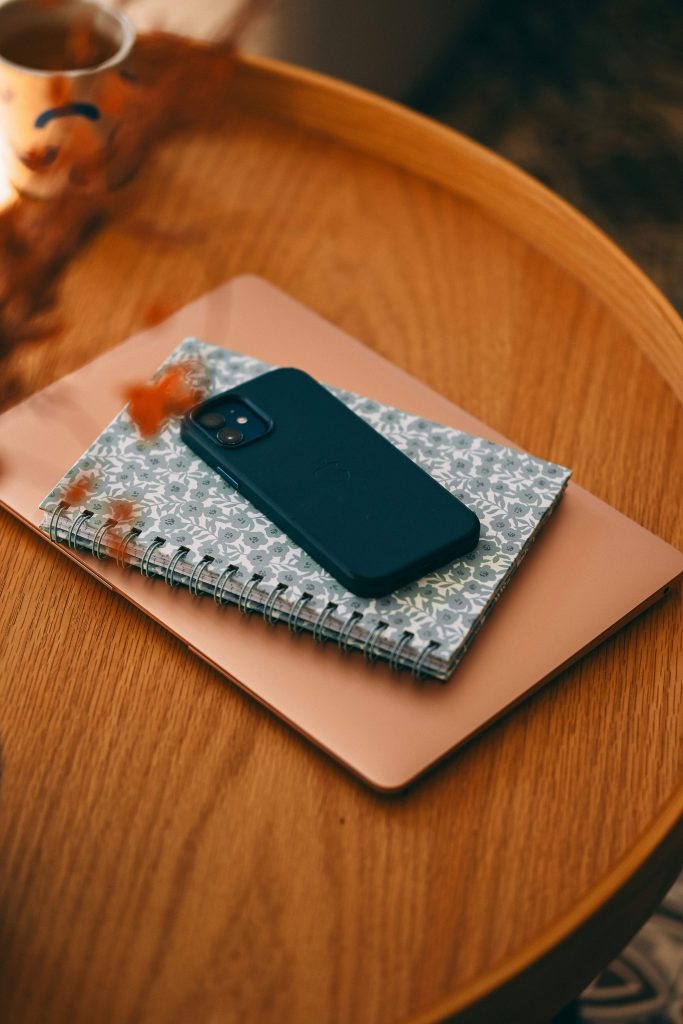
Phone set aside on a book as part of simplifying digital life and reducing distractions.  A recommendation from the simplify your life checklist
Photo by Swello on Unsplash

Simplify Your Life Checklist: Delete apps you don’t use

Take a few minutes to look through your phone.

If you haven’t opened an app in months, ask yourself whether you really need it.

Clean up your inbox

Delete old emails you don’t need and unsubscribe from things you never read.

You don’t have to get your inbox to zero. Just make it easier to find what matters.

Create phone-free periods

Try putting your phone away during meals, while you’re reading, during conversations, or for part of the evening.

You may be surprised by how much more time you seem to have when you’re not checking your phone every few minutes.

7. Simplify Your Relationships and Commitments

Simplifying your life also means looking at the commitments and relationships that take up your time and energy.

As you move through midlife, it’s reasonable to reconsider what still fits your life.

Stop saying yes out of guilt

You can care about someone and still say no.

Before agreeing to something, ask yourself whether you genuinely want to do it or whether you’re saying yes because you feel like you should.

Let other adults handle their own responsibilities

It’s easy to become the person who remembers everyone’s appointments, birthdays, schedules, errands, and deadlines.

But not every problem needs you to solve it.

Ask for help

If you’re always the one organizing, planning, cooking, cleaning, remembering, or coordinating, look for opportunities to share some of the responsibility.

You don’t have to do everything yourself.

Reconsider commitments that no longer fit

Take a look at the clubs, volunteer commitments, recurring events, groups, and obligations on your calendar.

Are there any that you continue simply because you’ve always done them?

You can decide that something has run its course.

8. Simplify Your Life Checklist: Keep Your Expectations Simple

At its heart, simplifying your life is really about intentional living. You’re deciding what deserves your time, attention, money, and energy rather than automatically saying yes to everything.

But sometimes the biggest change comes from deciding you don’t have to keep living according to expectations that no longer fit.

Stop trying to do everything perfectly

Your house doesn’t have to look perfect.

Dinner doesn’t have to be complicated.

Your holiday doesn’t have to look like someone else’s.

Your schedule doesn’t have to be full.

Good enough is often good enough.

Let go of outdated expectations

Maybe you once thought your life would look a certain way by this point.

Maybe you thought you’d have more time, a different career, a certain kind of home, or a particular family dynamic.

Life rarely follows the exact plan we imagined.

You don’t have to keep chasing an old version of what you thought your life should be.

Woman enjoying a quiet moment at home while reflecting on what matters most and simplifying her life.
Photo by Toa Heftiba on Unsplash

Stop comparing your life to someone else’s

It’s especially easy to do this online.

Someone else’s beautifully decorated home, perfectly planned vacation, busy social calendar, or impressive accomplishments don’t tell you what their everyday life actually looks like.

Your life doesn’t need to resemble someone else’s to be a good life.

Decide what matters most to you now

This may be the most important item on the entire checklist.

What do you want more room for?

Maybe it’s time with family, time to travel, or to enjoy hobbies you haven’t been able to.  Or perhaps it’s your home, friendships, creativity, reading, exercise, a quiet morning, or simply having less on your calendar.

Once you know what matters, it’s easier to decide what doesn’t.

The older I get, the more I appreciate having fewer things competing for my attention. I don’t necessarily want a smaller life. I want a life that feels more like mine. That means being a little more selective about what I spend my time on, what I bring into my home, and what I say yes to.

How to Use This Simplify Your Life Checklist

If you’ve made it through this entire checklist, you may be tempted to start making another list of everything you’re going to change.

Don’t.

That would be a little ironic.

Instead, choose three things that would make the biggest difference in your life right now.

Maybe you need to clean out your closet.

Maybe your calendar is too full.

Maybe your phone is demanding too much of your attention.

Maybe you’ve been saying yes to things you no longer want to do.

Or maybe you simply need to leave some space in your week.

Start there.

Simplifying your life isn’t about creating a perfectly organized home, an empty calendar, or a minimalist lifestyle.

It’s about making everyday life a little easier and making room for the things that are important to you.

You don’t have to simplify everything. You just have to start somewhere. You can come back to this simplify your life checklist whenever you need a reminder that making life easier doesn’t require changing everything.

Want a Simple Way to Get Started?

Download the free Simplify Your Life Checklist and use it to choose the areas of your life you’d most like to simplify.

Frequently Asked Questions About Simplifying Your Life

What does it mean to simplify your life?

Simplifying your life means intentionally reducing unnecessary possessions, commitments, decisions, distractions, and responsibilities so you have more time and energy for the things that matter to you. It doesn’t necessarily mean minimalism or getting rid of everything you own.

How can I simplify my life quickly?

Start with one area that’s creating the most friction. Clear one cluttered space, cancel an unnecessary subscription, remove a commitment from your calendar, or simplify a routine. Small changes can make everyday life easier without requiring a major lifestyle change.

How do I simplify my life after 50?

To simplify your life after 50, start by looking at what no longer fits your life. This might include possessions, commitments, routines, relationships, or expectations that made sense in an earlier stage of life but no longer feel necessary. Simplifying can be less about doing more efficiently and more about deciding what you no longer need to do.

Is simplifying your life the same as minimalism?

No. Minimalism is one approach to simplifying, but you don’t have to become a minimalist to simplify your life. You can keep the things you love while reducing the things that create unnecessary work, clutter, expense, or distraction.

How do I know what to simplify first?

Pay attention to what repeatedly makes you feel frustrated, rushed, overwhelmed, or inconvenienced. That’s often a good place to start. Choose one small change rather than trying to simplify everything at once.

If you enjoyed this blog post, don’t forget to subscribe to our blog for more inspiring ideas and tips. You can also follow us on PinterestFacebook, Instagram and Flipboard.

Other Posts You May Enjoy
How to Declutter Your House in One Day
If you’re ready to simplify your home, this practical guide can help you break decluttering into manageable steps without feeling overwhelmed.
how to declutter sentimental items

How to Declutter Sentimental Items
Sentimental clutter can be some of the hardest to let go of. Learn how to make thoughtful decisions while still honoring the memories behind your belongings.
How to Make Time for Yourself in Midlife
If your schedule is one of the areas that needs simplifying, these ideas can help you find more time for yourself without adding another complicated routine.
Pin image showing Clean and cozy desk setup

How to Use a Time Block Planner for Productivity and Focus
A simple time-blocking approach can help you organize your day, focus on what matters, and avoid overloading your schedule.

Simple Self-Care Organization Ideas
If your routines and self-care habits feel like one more thing to manage, these ideas can help you create a simpler approach.

Be sure to save this Simplify Your Life Checklist for later!
Simplify your life checklist with 40 simple ways to reduce clutter, simplify your schedule, and make everyday life easier.
easy summer front door decor ideas

Easy Summer Front Door Decor Ideas for a Simple Entryway Refresh

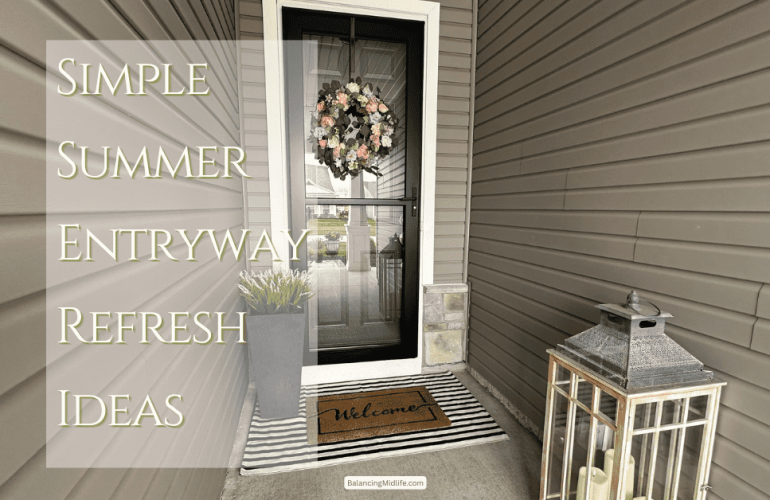
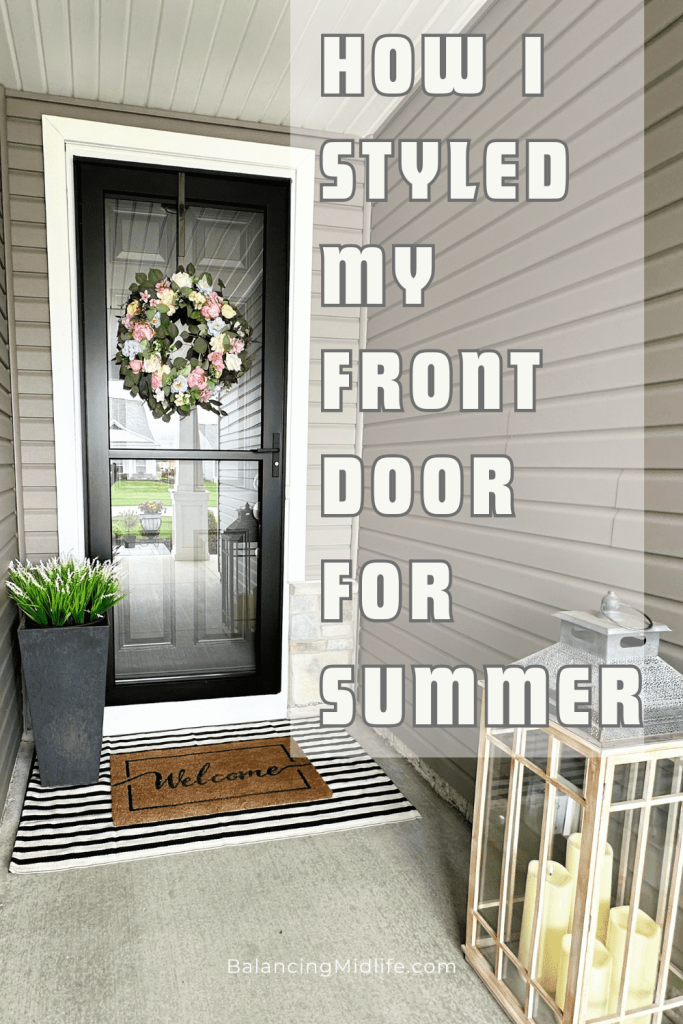
With summer approaching quickly, I’ve been craving lighter colors, fresh greenery, and simple seasonal touches around the house. One of the first spaces I wanted to refresh was our front entryway, so I started gathering a few easy summer front door decor ideas to brighten the space and make it feel more welcoming for the season. Even though our entryway is fairly small, I truly believe the front door sets the tone for your home and creates that important first impression for guests.

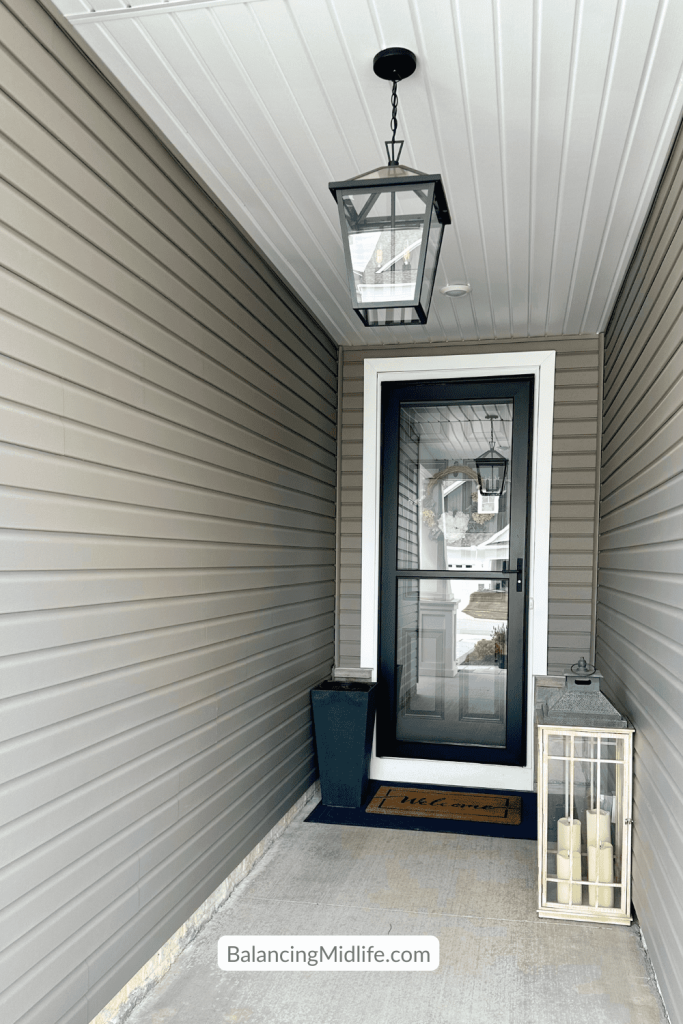
Our entryway is somewhat narrow, and the front door itself is very dark, so I knew I wanted to use brighter summer decor to help soften and brighten the space. Another challenge was the lack of sunlight. This area gets virtually no sunlight throughout the day, which meant I needed to get creative when it came to adding plants and greenery.

Today I’m sharing the easy summer front door decor ideas I used to refresh this space for the season, along with a few simple decorating tips that helped create a warm and welcoming entryway without spending a fortune.

Here is a quick look at the space before I started refreshing it for summer.

Before the Summer Refresh

before photo of the front door area

My posts may contain affiliate links. If you purchase through one of these links, you will not pay a penny more, but I will receive a small commission. Please read my disclaimer for more information.

My Goal for This Summer Front Door Refresh

When decorating any smaller space, I try to focus on a few intentional changes instead of filling the area with too much decor. I wanted this summer entryway refresh to feel calm, inviting, functional, and easy to maintain throughout the season.

Creating a Warm and Welcoming Entryway

Since our front door area tends to feel a bit dark, my goal was to make the space feel softer and more welcoming with lighter colors, greenery, and natural textures. I wanted it to feel cheerful for summer while still blending with the style of our home.

Keeping the Decor Simple and Functional

As much as I enjoy seasonal decorating, I also want our entryway to work well for everyday life. The space needed to stay practical for guests, packages, shoes, and daily traffic while still feeling stylish and cozy.

Using Affordable Finds for a Cohesive Look

Many of the pieces I used for this summer refresh were affordable finds that helped pull the entire space together beautifully. I love using simple neutral decor pieces that can easily transition from season to season with just a few small updates.

Easy Summer Front Door Decor Ideas I Used in This Space

Starting With a Fresh Summer Front Door Wreath

One of the easiest ways to refresh a front door for summer is by adding a seasonal wreath. Since our front door is often open during warmer months, I wanted to choose something that coordinated naturally with the colors and style inside our home as well.

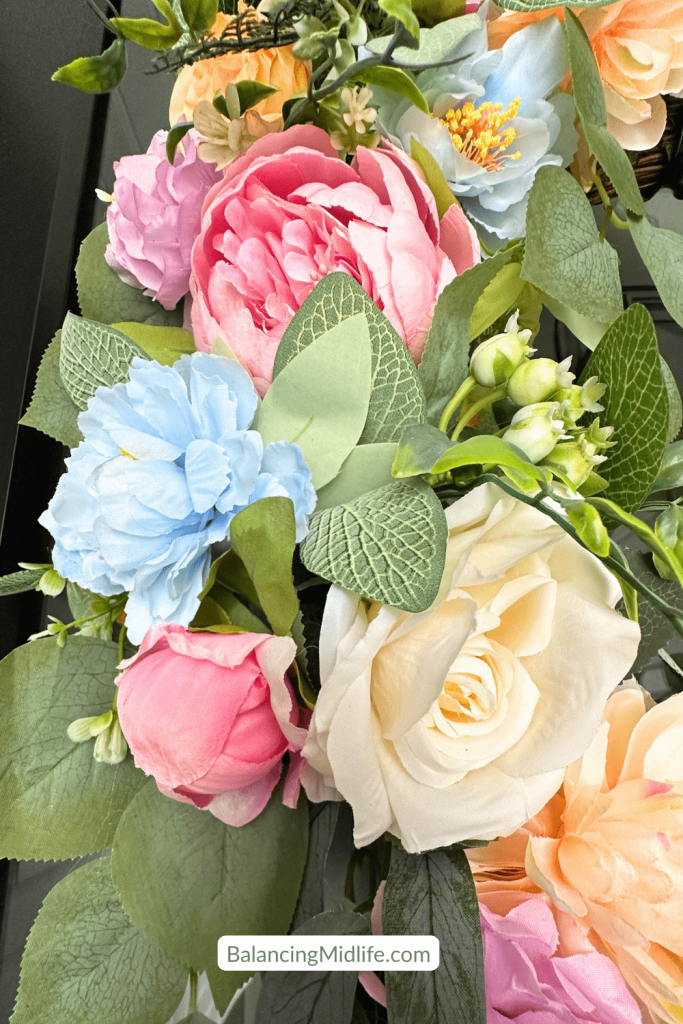
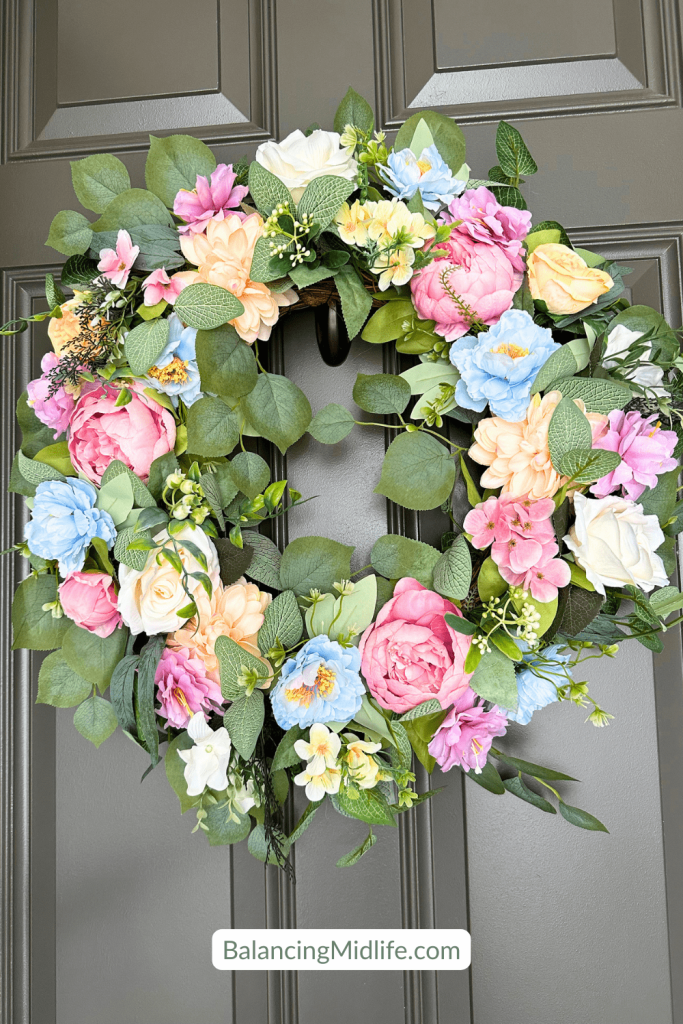
I ended up choosing a beautiful summer wreath with soft pinks, blues, off-white, and peach with a relaxed, casual feel. It instantly brightened up the dark front door without overwhelming the space. I also love how it adds just enough color while still keeping the overall look calm and somewhat neutral.

close-up of wreath for summer front door decor

If you are decorating a smaller front entryway, a wreath is one of the simplest ways to make a big impact with very little effort.

summer front door wreath on dark front door

Layering a Doormat for Easy Summer Front Door Decor

Layering doormats is one of my favorite decorating tricks because it adds warmth, texture, and character almost instantly. It also helps make a small entryway feel more styled and intentional without adding clutter.

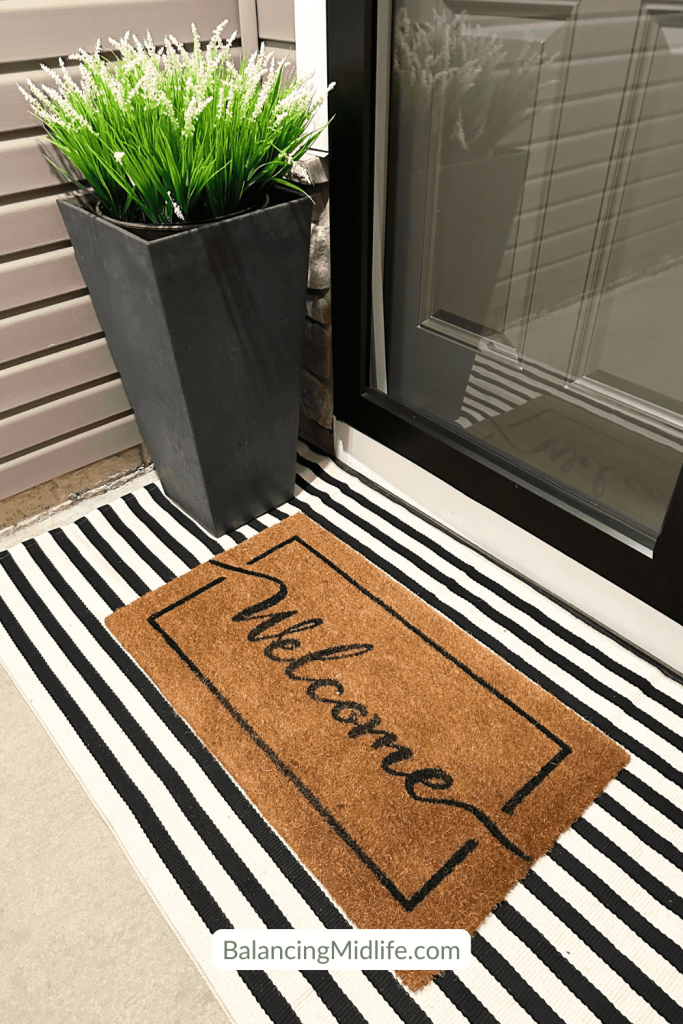
For this space, I chose a larger outdoor rug for the base and layered a smaller coir mat on top. Not only does this combination look cozy and inviting, but it is also practical for everyday use when guests come into the house.

I think layered rugs are one of the best summer front door decor ideas because they work beautifully with almost any decorating style, from farmhouse to modern to coastal-inspired spaces.

layered doormats for easy summer front door decor

Adding Planters and Greenery to My Summer Entryway

Adding greenery was probably the most important part of this summer front door refresh. Plants instantly make a space feel more alive, welcoming, and seasonal.

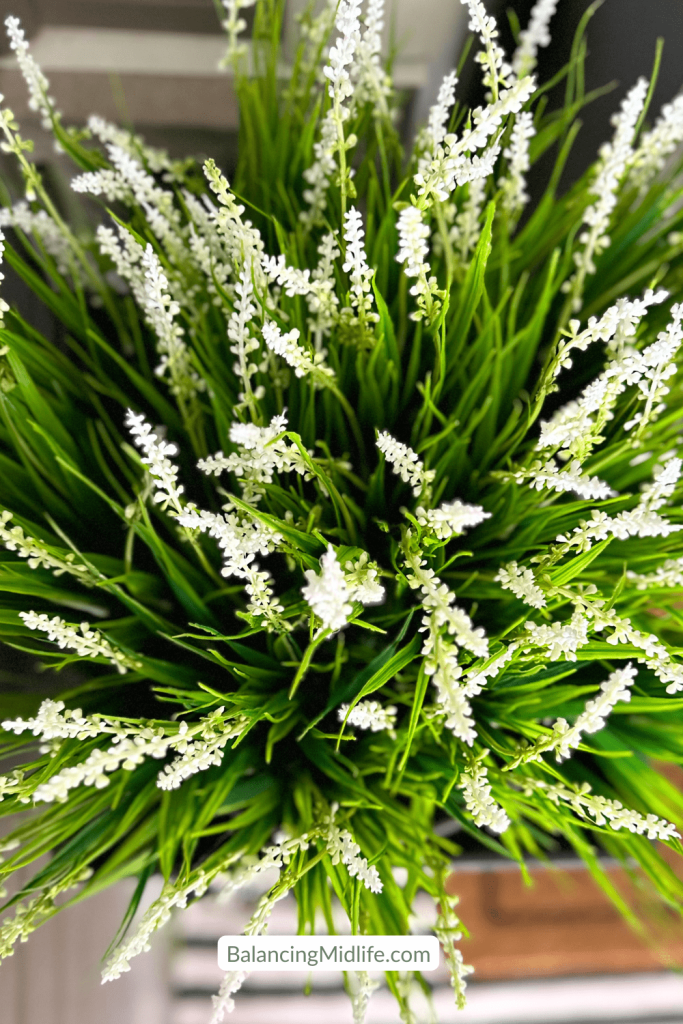
In previous years, I tried using shade-loving annuals in this area, but because this space gets very little sunlight, they never performed particularly well. This year, I decided to use artificial greenery instead, and honestly, I could not be happier with how it turned out.

faux greenery is an easy summer front decor idea

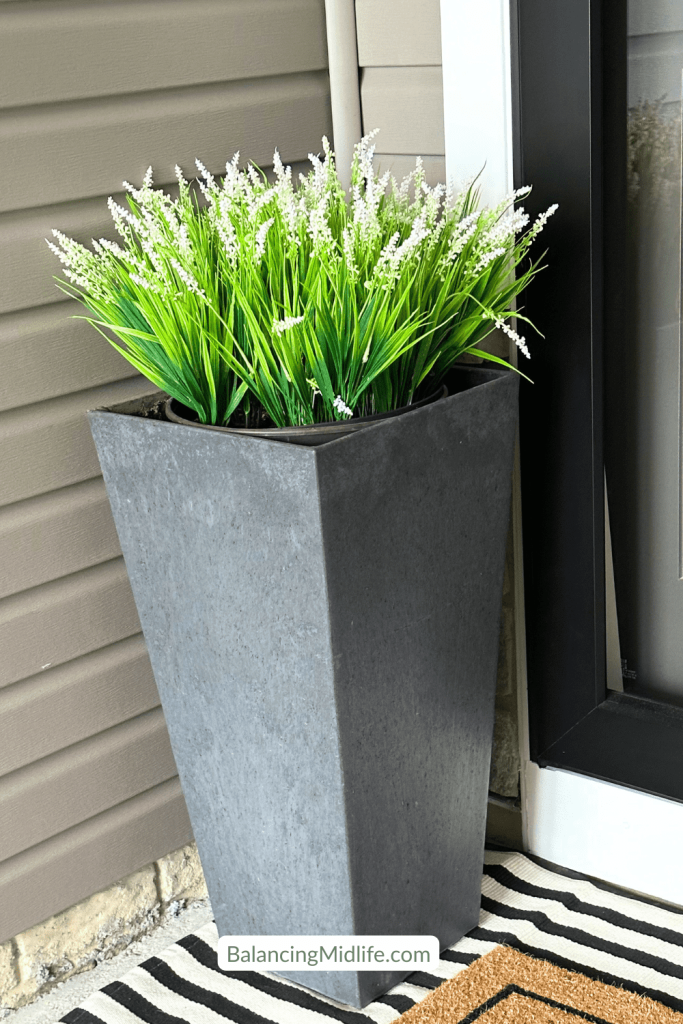
The faux plants helped brighten up the darker corner beautifully while adding softness and texture to the entryway. Even better, they require no maintenance, no watering, and continue looking fresh throughout the season.

If you have a front porch or entryway that lacks sunlight, as mine does, artificial greenery can be such a practical and beautiful solution.

faux greenery in planter for a cozy corner in summer front porch decor

Lanterns and Small Decor Accents for a Welcoming Front Door

To finish off the space, I added a large lantern for extra warmth and character. Lanterns are one of those decor pieces that instantly create a cozy atmosphere, especially during summer evenings.

Inside the lantern, I used battery-operated candles with a remote control, which makes them incredibly easy to turn on at night. The soft glow adds just enough ambient lighting to make the entryway feel calm, relaxing, and welcoming after sunset.

candles lit inside lantern by front door

One thing I have learned when decorating smaller spaces is that you really do not need a lot of decor. A few intentional pieces often create a much more beautiful and peaceful look than overcrowding the space with too many accessories.

How I Kept My Summer Front Door Decor Calm and Uncluttered

Sticking to a Neutral Summer Color Palette

Since the front door itself is dark, I chose lighter neutral tones combined with greenery to brighten and soften the area. Keeping the color palette simple helped everything feel cohesive and airy instead of busy.

Mixing Natural Textures for Warmth

One of my favorite ways to make a space feel cozy and welcoming is by layering natural textures. The woven rugs, greenery, lantern, and soft summer colors all helped add warmth and dimension to the entryway.

Choosing Only a Few Statement Pieces

Rather than filling every corner with decor, I focused on a few larger pieces that made an impact. The wreath, layered rugs, greenery, and lantern were enough to make the space feel finished without feeling cluttered.

Simple Summer Front Door Decor Tips

Focus on Layers for Easy Summer Front Door Decor

Layering textures through rugs, greenery, lanterns, and wreaths creates a styled and welcoming look without overcrowding the area.

Use Greenery to Brighten Summer Front Door Decor

Whether you choose real plants or artificial greenery, adding some form of greenery instantly helps a front entryway feel fresher, more inviting, and seasonal.

Reuse Neutral Decor Pieces Each Season

One of my favorite ways to keep seasonal decorating budget-friendly is by using neutral base pieces throughout the year. Simple swaps like wreaths, greenery, pillows, or lantern accents can completely refresh a space without needing all new decor.

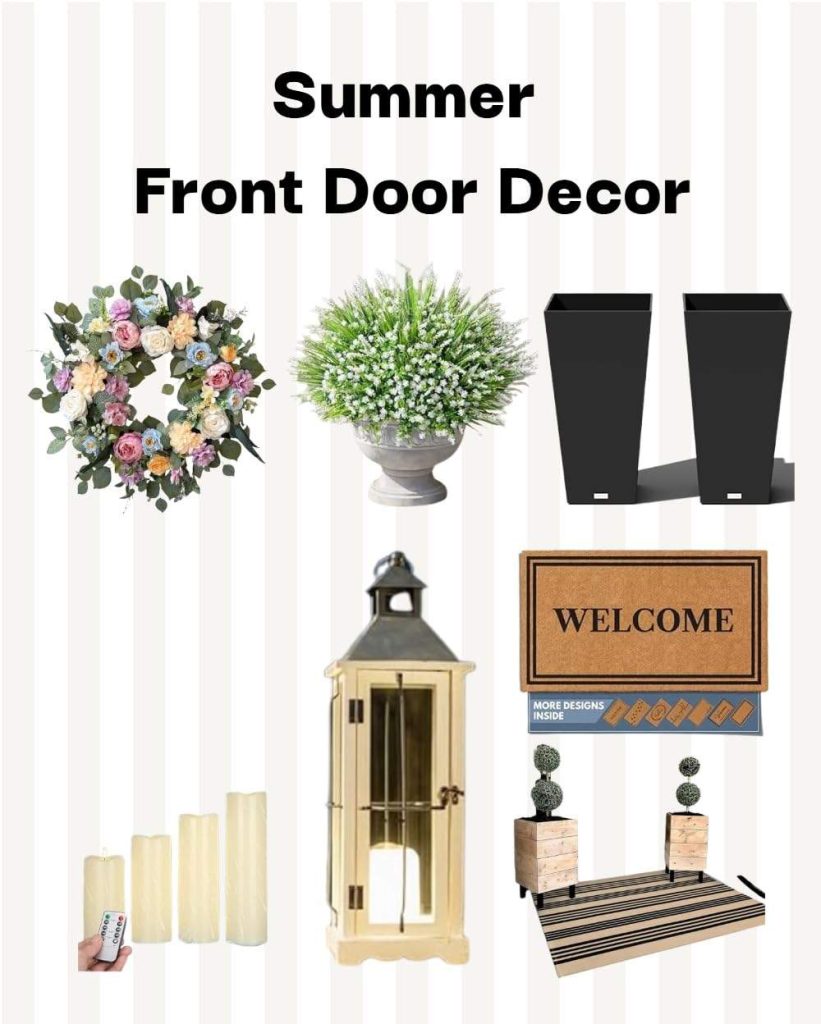
Here’s a closer look at the decor pieces I used to pull together this simple summer entryway refresh.

collage of all items used to create easy summer front door ideas

Shop My Easy Summer Front Door Decor

Front Door Summer Wreath

Outdoor Rug and Doormat

Greenery and Planter

Lantern (similar to mine) and Battery Operated Candles

Frequently Asked Questions

How can I decorate my front door for summer on a budget?

Simple changes like adding a seasonal wreath, layering rugs, incorporating greenery, and using lanterns or candles can completely refresh a front entryway without spending a lot of money. Reusing neutral decor pieces each season also helps keep costs down.

What colors work best for summer front door decor?

Light neutrals, soft greens, warm natural tones, and subtle seasonal colors work beautifully for summer front door decor. These colors help create a fresh and welcoming look.

How do I make my entryway feel more welcoming?

Adding greenery, soft lighting, layered textures, and a few intentional decor pieces can instantly make a front entryway feel warmer and more inviting.

What are the easiest summer front porch decorating ideas?

Some of the easiest summer front porch decorating ideas include hanging a seasonal wreath, layering outdoor rugs, adding planters or greenery, and incorporating lanterns with candles for soft evening lighting.

summer front door decor

Final Thoughts on My Simple Summer Entryway Refresh

Refreshing our front door area for summer ended up making a much bigger difference than I expected. Even though the space itself is fairly small, adding a few thoughtful touches helped it feel brighter, softer, and far more welcoming.

I think sometimes we assume seasonal decorating needs to be elaborate or expensive to make an impact, but often the simplest changes are the ones that create the most warmth. A fresh wreath, layered rugs, greenery, and soft lighting were really all this entryway needed to feel refreshed for the season.

I hope these easy summer front door decor ideas inspire you to create a welcoming summer entryway that feels beautiful, functional, and true to your own style.

If you enjoyed this blog post, don’t forget to subscribe to our blog for more inspiring ideas and tips. You can also follow us on PinterestFacebookInstagram, and Flipboard.

More Simple Summer Inspiration You May Enjoy

Be sure to Pin this for easy summer front door decor ideas you’ll want to try this season.

easy summer front door decor ideas
time block planner for productivity with coffe cup and flowers

How to Use a Time Block Planner for Productivity and Focus

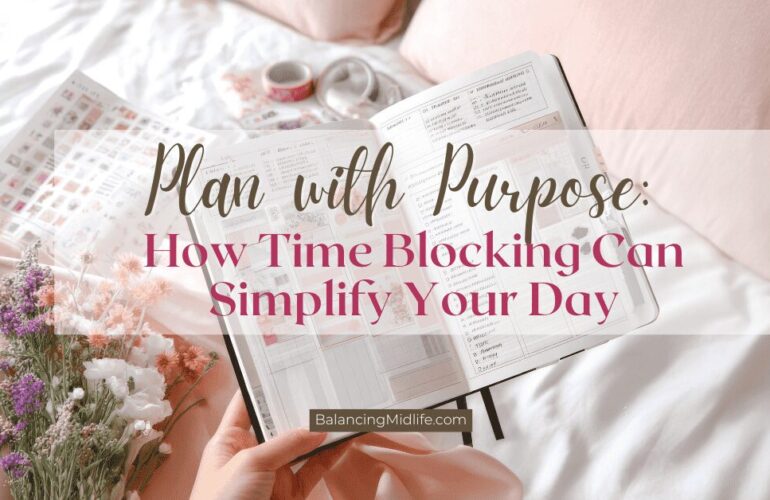
Do you ever reach the end of the day wondering where the time went, even though you’ve been busy nonstop? If so, you’re not alone. It’s so easy to feel like you’re constantly juggling everything and still not getting enough done. That’s exactly why I started using a time block planner for productivity, and it completely changed how I move through my days.

Instead of feeling scattered, I finally have a way to stay focused, be more intentional, and carve out space for myself without the guilt. If you’ve been craving a little more calm and structure in your day, this post will walk you through exactly how to make that happen.

My posts may contain affiliate links. If you purchase through one of these links, you will not pay a penny more, but I will receive a small commission. Please read my disclaimer for more information.

Why Time Blocking Works for Productivity

Time blocking is a simple yet powerful way to plan your day with purpose. Rather than trying to multitask or react to whatever pops up, you map out specific time blocks for what matters most, from focused work sessions to quiet self-care breaks.

Woman using a time block planner for productivity and focus
Photo by Icons8 Team on Unsplash

It’s not about doing more, it’s about being more intentional with your time. Once you start using a time block planner for productivity, you’ll notice how much easier it becomes to protect your energy, stay focused, and actually follow through on your priorities.

If you’ve ever felt like your schedule controls you instead of the other way around, this method will help shift that. And if you want to take it a step further, my post on 5 Time-Saving Tips Which Will Make Your Life Easier At Home offers easy ideas to streamline your routine even more. You can read it here.

How to Use a Time Block Planner for Productivity

Here’s a simple way to start using your planner effectively:

1. Start with your priorities.
Before you fill in any blocks, take a minute to jot down what truly matters today. Not everything can be a top priority, and that’s okay.

2. Group similar tasks together.
Batching similar tasks like emails or errands helps keep your brain in the same zone and saves time switching between activities.

3. Don’t forget to block self-care time.
Productivity isn’t about working nonstop. It’s about finding balance. Add time blocks for rest, movement, or just a few minutes of quiet. My post on How to Make Time for Yourself Even When Life Seems Crazy has a few tricks that pair perfectly with this step.

4. Protect your focus time.
This is your “no interruptions” block, the time when you can truly get things done. Silence notifications and allow yourself to dive in.

5. Reflect and adjust.
At the end of the week, take a few minutes to look at what worked (and what didn’t). Time blocking gets easier the more you do it.

How I Use My Time Block Planner

Personally, my Time Block Planner for Productivity has been a total game-changer. I like to fill it out the night before to help me wake up with a plan and a sense of calm rather than chaos. You can grab the planner here.

time block planner

Each block helps me focus on one thing at a time and makes room for meaningful breaks. I also pair it with my Self-Care Organization Checklist, which helps me make sure I’m not just checking off tasks but also taking care of myself in the process. Get the checklist here.

self-care organization check list is the perfect companion to a time block planner

If mornings tend to feel rushed, my post on How to Be More Productive in the Morning for a Successful Day is another great read to help you start your day feeling more grounded and prepared.

The Connection Between Time Blocking and Self-Care

It might not seem obvious, but time blocking is actually an act of self-care. When you intentionally plan your day, you’re setting boundaries that protect your time, energy, and mental space.

aking a mindful break with a time block planner to balance productivity and self-care
Photo by Jelena Mirkovic on Unsplash

That’s why I love this system so much! It helps me feel more balanced and less reactive. I know there’s time for both focus and rest, which makes all the difference.

Before adding another productivity strategy to your day, consider whether your schedule needs simplifying. My Simplify Your Life Checklist offers some simple ways to start.

FAQs About Time Blocking

What’s the best length for a time block?
Everyone’s different, but most people do well with 60–90 minute blocks followed by short breaks.

What if I get off schedule?
Don’t stress it! Just move the task to a new time block or tomorrow’s plan. The goal is progress, not perfection.

Can I use time blocking even if my schedule changes a lot?
Absolutely. It’s flexible and easy to adjust as your day unfolds.

Final Thoughts

Using a time block planner for productivity isn’t about filling every minute. It’s about creating more intention and flow in your day. When you structure your time with purpose, you’ll notice more focus, less overwhelm, and even more space for the things you enjoy.

Want to give it a try? You can grab my Time Block Planner for Productivity in my Etsy shop. It pairs perfectly with my Self-Care Organization Checklist, especially if your goal is to be more organized and intentional with your days.

Do you already use time blocking or plan to start? Share your experience or favorite tips in the comments

If you enjoyed this blog post, don’t forget to subscribe to our blog for more inspiring ideas and tips. You can also follow us on PinterestFacebookInstagram, and Flipboard.

Other Posts You May Enjoy:

Save this to stay inspired with your time blocking routine!

Pin image showing Clean and cozy desk setup
Calm and organized space with home essentials for midlife women

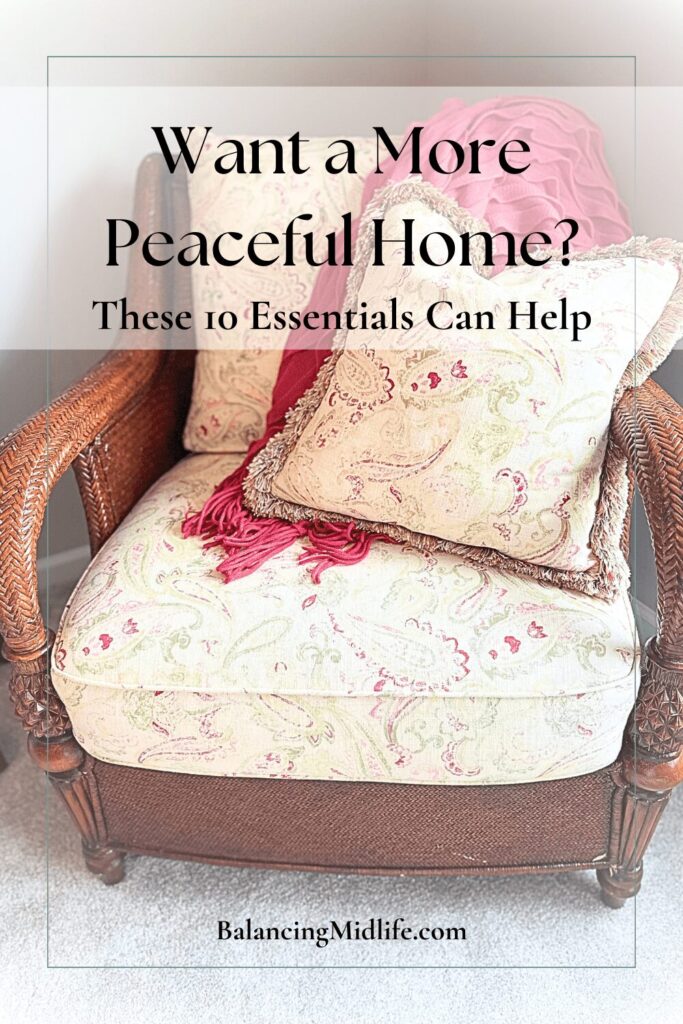
10 Home Essentials Midlife Women Need (That I Use and Love)

There comes a point in midlife when simplifying things at home starts to feel more important. After years of managing responsibilities and caring for others, we seem to crave more peace and ease in our daily routines. I have learned that having the right home essentials, which midlife women actually use and enjoy, can make a real difference in how peaceful and functional our space feels every day.

And, when your home feels more settled, it becomes easier to start your mornings with intention. If you are looking for ways to bring more purpose and mindfulness to the start of your day, be sure to check out these mindful morning routine ideas I put together.

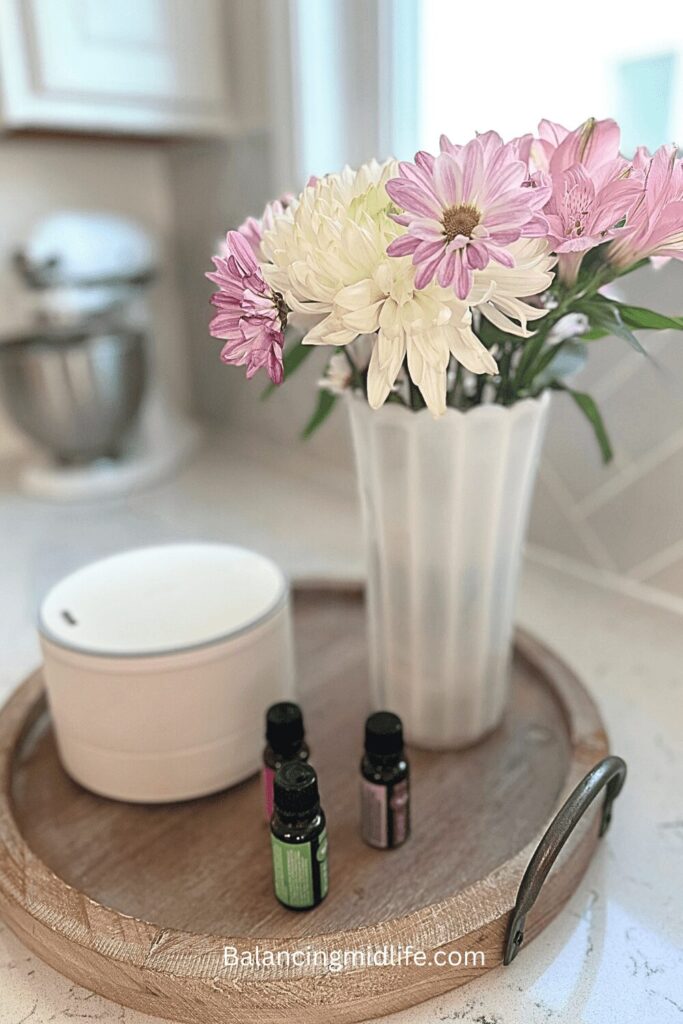
Home essentials for midlife women with flowers, diffuser, and essential oils

In this post, I’m sharing a collection of home essentials midlife women can truly benefit from. These are items I personally use and genuinely love.

They are not flashy or complicated, just thoughtful pieces that help keep things organized, reduce the visual noise around the house, and support a low-tox lifestyle. If you are looking for practical solutions that bring a little more order and calm into your space, I think you will find this list helpful.

My posts may contain affiliate links. If you purchase through one of these links, you will not pay a penny more, but I will receive a small commission. Please read my disclaimer for more information.

You can also browse all of these home favorites together in my Amazon storefront.

Tips for Choosing Home Essentials Midlife Women Will Actually Use

Over the years, I’ve learned a few things about what really works for my home and what just adds to the chaos. Here are a few things I keep in mind when choosing new essentials:

  • Keep it simple – Choose items that make your routines easier, not more complicated
  • Look for low-tox options – From the products we clean with to how we store our food, making safer, lower-toxin choices throughout the home helps support our health and well-being in this season of life.
  • Prioritize organization – A place for everything helps reduce visual stress
  • Make it easy to clean – Less maintenance means more peace
  • Choose quality over quantity – In midlife, we’re done with quick fixes
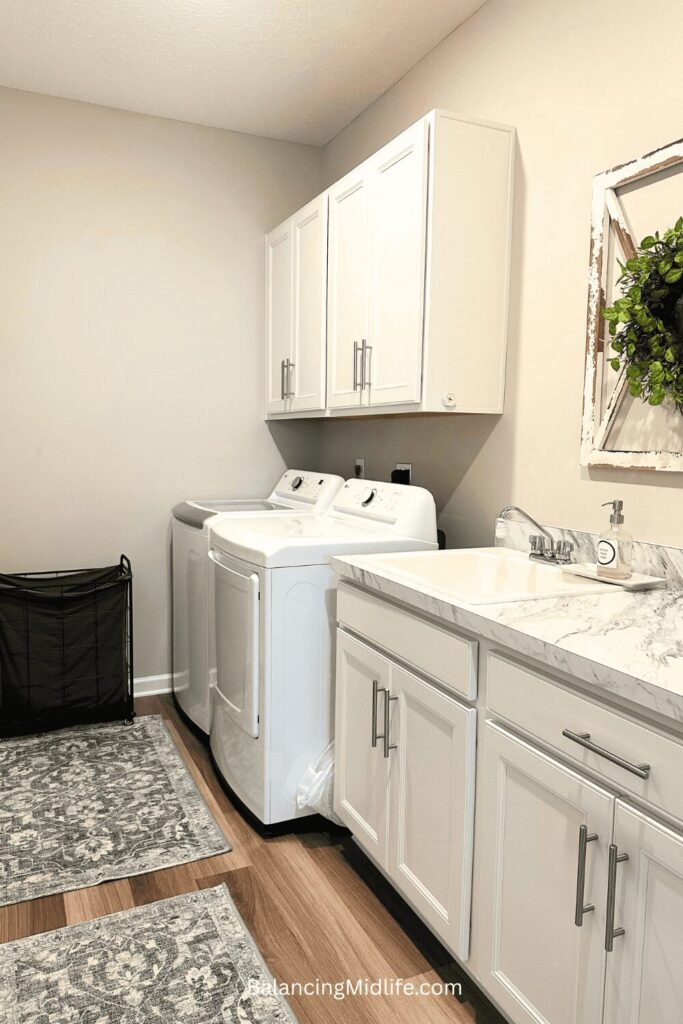
organized laundry room

I’ve gathered these practical home favorites into one easy Amazon storefront collection as well.

10 Tried and True Home Essentials for Midlife Women

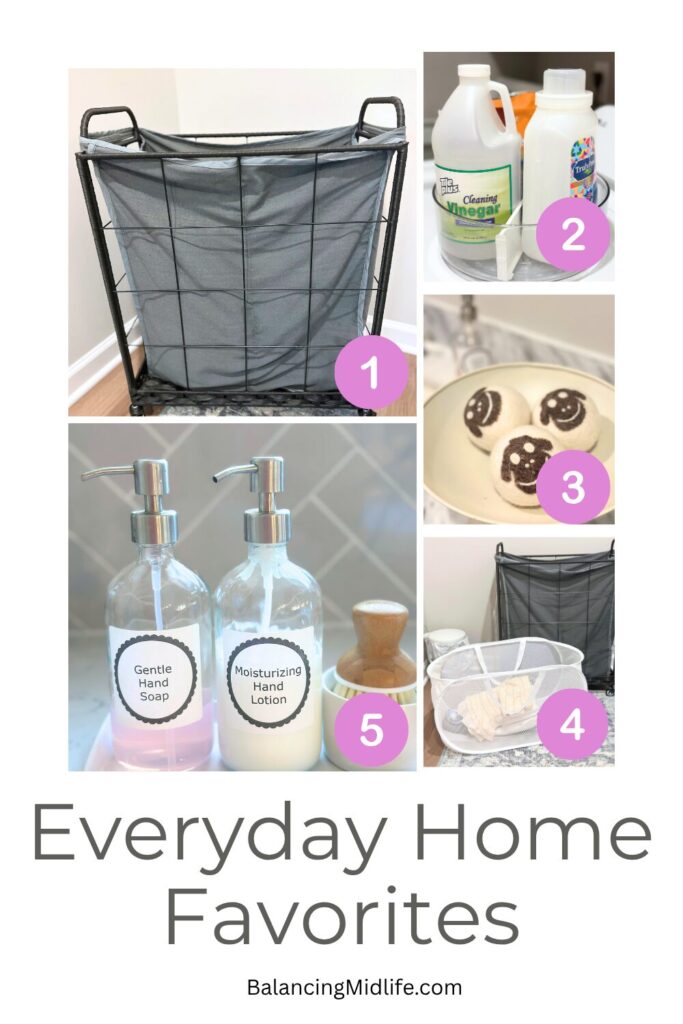
  1. Laundry Bin Organizer – This has made a big difference in my laundry routine. It helps me sort clothes ahead of time so laundry day is much less chaotic. It’s one of those little upgrades that takes a daily chore from messy to manageable.
  2. Lazy Susan for Laundry Supplies – Instead of reaching over cluttered shelves, I added a simple turntable for detergent, enzyme stain remover, and toxin-free whitening agent. It’s such an easy fix and makes everything accessible and neat, especially in tight laundry spaces.
  3. Wool Dryer Balls – These are a great switch if you’re trying to go more low-tox. They help clothes dry faster, reduce static, and replace those heavily fragranced dryer sheets. I like knowing they’re safer for our skin and our air.
  4. Collapsible Laundry Basket – This is perfect if you don’t have a lot of space in your laundry room. It folds flat when not in use and is easy to carry around the house. I didn’t realize how bulky our old laundry baskets were until I made the switch.
  5. Glass Soap and Hand Lotion Dispensers – These look so much better than mismatched plastic bottles. I fill one with gentle hand soap and the other with nourishing hand lotion. It’s a tiny daily luxury I genuinely look forward to using.
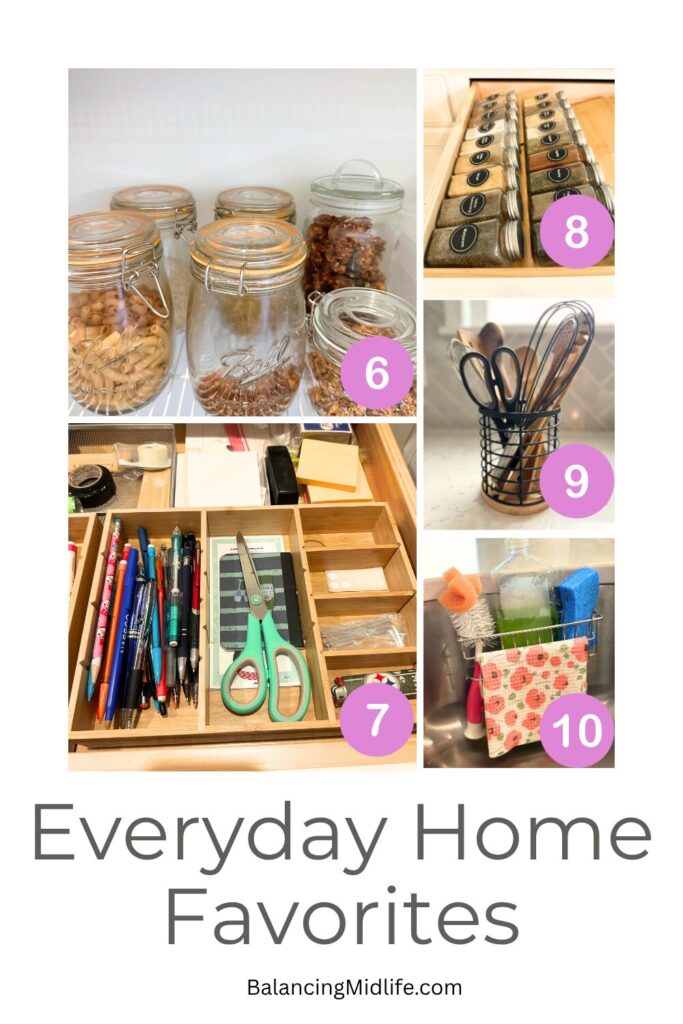
  6. Glass Food Storage Containers I replaced our old plastic pantry containers with glass ones, and it has made such a difference. Glass keeps dry goods fresher, looks cleaner on the shelf, and is free from the harmful chemicals often found in plastic. It’s a simple switch that supports a lower-toxin lifestyle and helps keep our pantry both functional and beautiful.
  7. Drawer Organizers for Junk and Silverware – When everything has a home, things just feel better. I use these to keep both the silverware drawer and our “catch-all” junk drawer under control. No more digging through pens, batteries, and paperclips to find a pair of scissors.
  8. Spice Organizer and Glass Jars with Labels – Opening the spice cabinet used to stress me out! Why do the cinnamon and paprika like to hide? These labeled jars keep everything in place and easy to find, and they look so clean and satisfying.
  9. Utensil Holder for the Counter – This little addition makes daily cooking easier. I keep my most used spoons and spatulas right on the counter, and it frees up drawer space for other things. It’s both functional and tidy.
  10. Soap and Sponge Holder for the Sink – If your sponge always ends up soggy and squished next to the faucet, this is a simple fix. It helps everything dry properly, keeps the area tidy, and makes your sink setup feel more intentional.

These everyday essentials have brought more order to my home, and with that comes a real sense of peace.

Are you ready to bring more calm and organization to your space?

Download my free checklist with all the essentials I recommend.

Small Changes Make a Big Difference

In this season of life, having a home that feels calm and supportive matters because it is where you care for yourself just as much as you have cared for others. You want it to support your day, not drain your energy. These home essentials midlife women need aren’t flashy, but they bring structure and ease, and honestly, that’s what I’m looking for more of these days.

Easy Home Essentials Bundles Midlife Women Will Appreciate

  • Laundry Room Refresh: Laundry bin organizer, Lazy Susan, dryer balls, collapsible basket
  • Kitchen Counter Calm: Soap and sponge holder, glass dispensers, utensil holder
  • Everyday Organization: Drawer organizers, spice jars, glass food containers
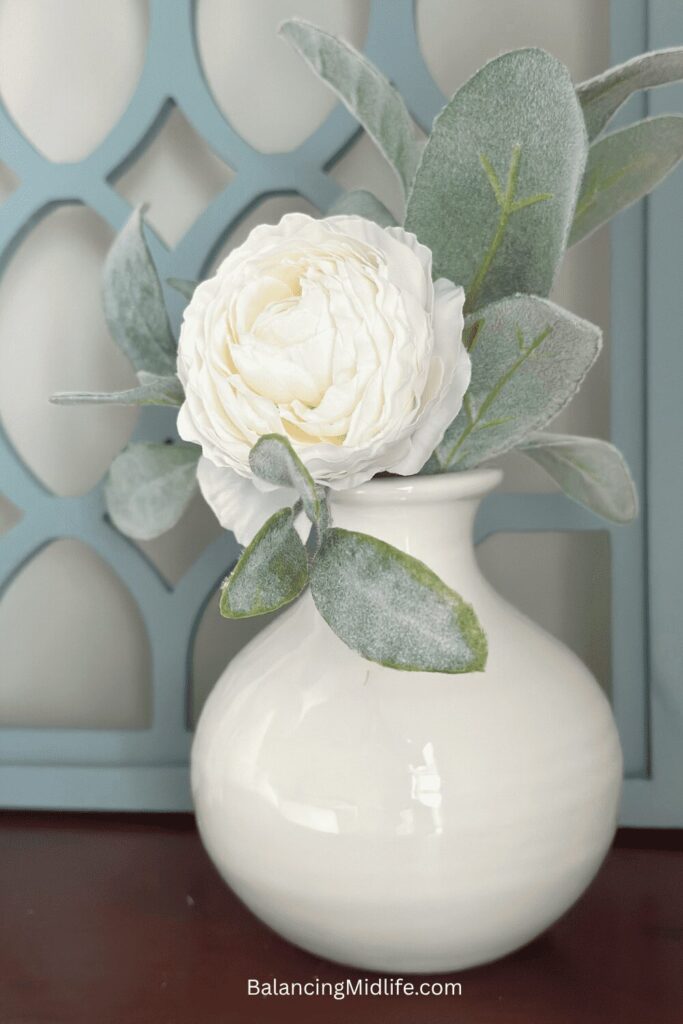
white flower in a vase

What Would You Add to The List?

I’d love to hear what’s working for you in your home right now. What simple tools or systems have helped you create more peace and ease in your day? Share a comment below or send me a message. I’m always looking for great ideas from women in this season of life.

If you enjoyed this blog post, don’t forget to subscribe to our blog for more inspiring ideas and tips. You can also follow us on PinterestFacebookInstagram, and Flipboard.

Want to browse everything in one place? You can shop my full Calm & Organized Home Essentials collection in my Amazon storefront.

Shop the Essentials I Use and Love

Visual summary of home essentials for midlife women
  1. Laundry Bin Organizer
  2. Lazy Susan for Laundry Supplies
  3. Wool Dryer Balls
  4. Collapsible Laundry Basket
  5. Glass Soap and Hand Lotion Dispensers
  6. Glass Food Storage Containers
  7. Drawer Organizers for Junk and Silverware
  8. Spice Organizer and Glass Jars with Labels
  9. Utensil Holder for the Counter
  10. Soap and Sponge Holder for the Sink

Other Posts You May Enjoy

Pin this for when you’re ready to simplify your space.

Minimal cozy space highlighting helpful home essentials for midlife women