
Feeling overwhelmed? Journaling is a simple yet powerful way to clear your mind, reduce stress, and boost self-awareness. In this post, you’ll discover the top 10 benefits of journaling for mental health, plus practical tips to get started!
In this blog post, I will share why journaling works and explore some practical tips on how to get started with this powerful practice. So, whether you’re looking to manage your emotions, boost your creativity, or simply find a safe and supportive outlet for your thoughts and feelings, keep reading to discover how journaling can help.
My posts may contain affiliate links. If you purchase through one of these links, you will not pay a penny more, but I will receive a small commission. Please read my disclaimer for more information.
Why Is Journaling Beneficial for Mental Health?
Journaling allows you to express your thoughts and emotions in a safe, private space. Scientific studies have shown that writing can lower stress hormones, improve mood, and help process difficult emotions. Here are some of the key benefits:
Reduces Stress and Anxiety
Journaling can help reduce stress by providing an outlet for expressing emotions and thoughts that may be causing anxiety or tension. Studies have shown that expressive writing can lead to decreased levels of the stress hormone cortisol.
Journaling gets even more powerful when you pair it with mindfulness. Check out my post on mindfulness practices to enhance your well-being to see how they work together!

Improves Mood and Emotional Well-Being
Journaling helps you process emotions and focus on positive aspects of your life. By tracking patterns in your thinking, you can shift your mindset toward gratitude and optimism.
Related Post: What is A Fixed Mindset? How to Shift to A Growth Mindset
Enhances Self-Awareness
Writing in a journal can help you gain a better understanding of yourself and your behaviors. This increased self-awareness can lead to better decision-making and problem-solving.
Another Benefit of Journaling for Mental Health Is It Helps You Processing Difficult Experiences
Journaling provides a healthy outlet to work through challenges, including past traumas or emotional struggles. Writing can help you make sense of painful events and start the healing process.
Journaling for Mental Health Helps Encourage Gratitude and Positivity
Writing in a journal can encourage you to focus on the positive aspects of your life and cultivate feelings of gratitude, which can lead to improved mental health and well-being.
Overall, journaling can be a very valuable tool for promoting mental health and well-being by providing an outlet for expressing emotions, improving mood, enhancing self-awareness, processing difficult experiences, and encouraging gratitude.
What Does Journaling Do for The Brain?
As mentioned above, writing about your thoughts and emotions can help you process and release stress.
Another one of the benefits of journaling for mental health is that it can improve your memory, boost creativity, and facilitate problem-solving.
What Are The 10 Benefits of Journaling for Mental Health
1. Promotes Personal Growth
Journaling can deepen self-awareness, which is key for personal growth. Check out my post on Personal Growth Goals: Tips on Why They Are Beneficial to Establish
2. Provides A Record Of Your Life
Keeping a journal allows you to document your thoughts and experiences over time, providing a valuable record of your life.
3. Improves Communication Skills
Writing regularly can help you improve your written communication skills, which can be useful in many areas of life.
4. Benefit of Journaling for Mental Health: Enhance Emotional Intelligence
Journaling can help you develop greater emotional intelligence, including self-awareness, self-regulation, empathy, and social skills.
5. Mental Health Journaling Helps With Goal Setting
Journaling can help you clarify your goals, track your progress, and stay motivated.

6. Supports Emotional Regulation
Writing about your emotions can help you process them and regulate your mood.
7. Enhances Self-Esteem
Journaling can help you focus on your strengths and accomplishments, leading to greater self-confidence and self-esteem.
Related Post: 5 Ways to Improve Self-Esteem: What I Wish I Knew Earlier in Life
8. Encourages Mindfulness
Writing in a journal can be a mindful activity allowing you to focus on the present while tuning out distractions.
Related Post: What is Mindfulness? How to Get Started & Enhance Your Midlife Well-Being
9. Benefits of Journaling for Mental Health: Increase productivity
Journaling can help you plan your day, prioritize what needs to be done, and help you stay organized.
Related Post: How to Create a Good Evening Routine for Better Sleep and Productivity
10. Provides A Safe Place for Self-Expression
It allows you to freely express yourself without fear of judgment which can be therapeutic and empowering.
Helpful Steps To Get Started Journaling For Mental Health
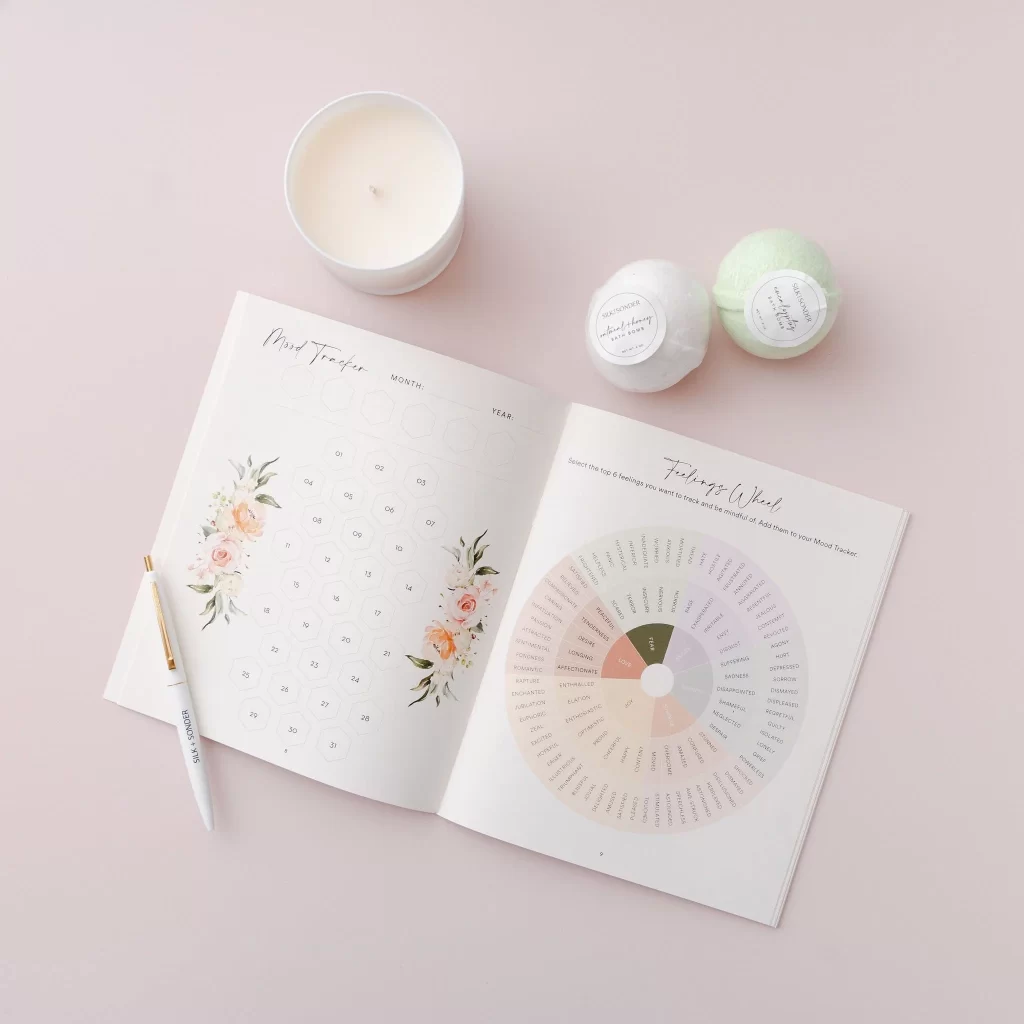
Choose a journal that suits you: Consider what style of journal you prefer. Some people find it helpful to choose a journal that you can lock or one with a unique cover to make it feel more personal. A spiral notebook can even be used as a journal. It does not have to be fancy to be effective.
Decide when and how often you want to write. Setting aside a specific time each day or week to write in your journal can help establish a routine and ensure that you make time for self-reflection. The most important thing is to choose a time that will work best for your schedule.
Write freely and honestly. Remember that this journal is for you and you alone. Write whatever comes to mind without worrying about grammar, punctuation, or spelling. Use your journal to express your emotions, thoughts, and experiences without fear of judgment.
Use prompts to get started: If you’re struggling to get started, consider using prompts to spark your creativity. (There are 20 prompts listed below to guide you.)
Reflect on your entries. Take some time to read through your past entries and reflect on what you’ve written. Look for patterns or themes that may emerge over time. This can help you gain insight into your emotions and behaviors and identify areas for growth.
Consider seeking additional support. While journaling can be a helpful tool for improving mental health, it’s important to recognize that it may not be enough on its own. Consider seeking additional support from a therapist or counselor if you’re struggling with mental health issues.
20 Journal Prompts for Mental Health
- What are three things I’m grateful for today, and why?
- What are some common negative thought patterns I experience, and how can I challenge them?
- How can I practice self-care and prioritize my mental health?
- What are some of my core values, and how can I align my actions with them?
- What are some obstacles or challenges I’m facing right now, and how can I overcome them?
- Are there some healthy coping strategies I can use when I’m feeling stressed or anxious?
- What are some activities or hobbies that bring me joy, and how can I make time for them in my life?
- What are some affirmations or positive self-talk that can help me feel more confident and self-assured?
- Are there relationships in my life that bring me joy and fulfillment? How can I nurture those connections?
- What are some long-term goals or aspirations I have for my mental health and well-being, and how can I work towards them?

20 Journal Prompts for Mental Health (continued)
- Are there triggers that tend to exacerbate my anxiety or depression? How can I manage them more effectively?
- What are some self-limiting beliefs I hold about myself, and how can I challenge them?
- What are some qualities I admire in others, and how can I cultivate those qualities in myself?
- How can I practice mindfulness and be more present in the moment?
- What are some small actions I can take each day to prioritize my mental health and well-being?
- What are some experiences or memories that bring up strong emotions for me, and how can I process those emotions?
- How can I can connect with others and build a supportive community around me?
- What are some things I’m proud of accomplishing recently, and how can I build on that momentum?
- How can I practice self-compassion and be kinder to myself?
- What are some things I’m looking forward to in the future, and how can I stay optimistic?
Need more ideas? Check out my post on Mindfulness Journal Prompts for Women in Midlife.
To Summarize The Benefits of Journaling for Mental Health
We now know what a powerful tool journaling can be for promoting mental health and well-being.
By taking the time to reflect on your thoughts, feelings, and experiences, you can gain greater self-awareness, regulate your emotions, and cultivate a sense of gratitude and positivity.
Whether you’re struggling with anxiety or depression, or simply looking to improve your overall mental health, journaling can be a valuable addition to your self-care routine.
So, if you haven’t already, why not give journaling a try? Take a few minutes each day to write in a journal using some of the prompts listed above or come up with your own. You might be surprised at how much clarity, insight, and peace of mind you can gain from this simple practice.
If you’re already a journaling pro, keep up the great work! Remember to be kind and compassionate with yourself as you write, and to focus on the positive changes you’re making in your life.
So, let’s make journaling a part of our daily routine, and see what positive changes we can create in our mental health and well-being!
I’d love to hear how journaling has benefited your mental well-being.
If you enjoyed this blog post, don’t forget to subscribe to our blog for more inspiring ideas and tips. You can also follow us on Pinterest, Facebook, Instagram and Flipboard.
Other Posts You May Enjoy:



Short of time? Pin this post for later!