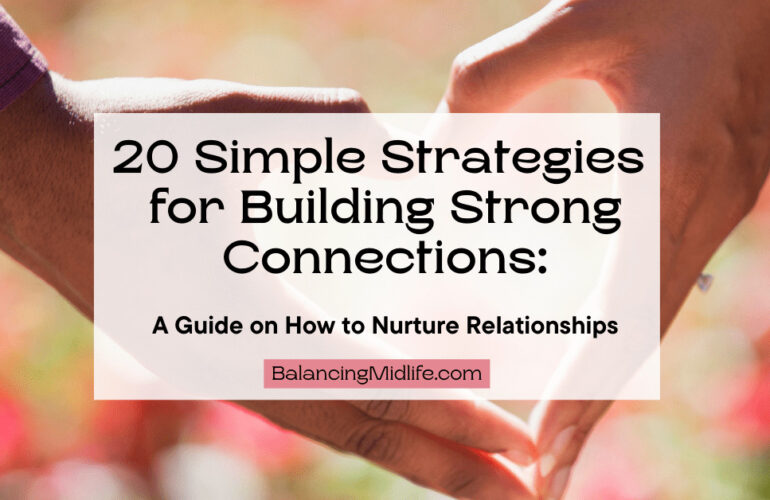
20 Simple Strategies for Building Strong Connections: A Guide on How to Nurture Relationships

Is having meaningful, lasting relationships with others an important part of your life? If so, this blog post on how to nurture relationships is perfect for you!

Our lives are filled with many unique challenges and moments when we need the connections of people we love to carry us through. Building strong connections takes work, though.  It’s not something that happens by chance or luck.  

I can attest to this personally, as I married my high school sweetheart at a young age, and many doubted the longevity of our marriage. Yet, through consistent efforts to nurture and strengthen our relationship, both during the highs and lows, here we are, more than 40 years into our marriage and going strong.

Nurture relationships/husband and wife
My husband & I

In this guide, I will share strategies to strengthen bonds, improve communication, and foster trust to help you nurture your connections with loved ones, build stronger friendships, or enhance your professional relationships.

My posts may contain affiliate links. If you purchase through one of these links, you will not pay a penny more, but I will receive a small commission. Please read my disclaimer for more information.

What Makes a Nurturing Relationship?

A nurturing relationship is characterized by several key elements that contribute to its positive and growth-oriented nature.  Understanding the key elements that contribute to their success is crucial to learning how to nurture relationships.

.Communication

Effective and open communication forms the foundation of a nurturing relationship. It involves active listening, empathy, and expressing thoughts and feelings honestly and respectfully.

Healthy communication allows for understanding, conflict resolution, and the building of deeper connections.

.Nurture Relationships With Trust and Mutual Respect

When it comes to learning how to nurture relationships, understanding the significance of trust and respect is paramount.  It involves reliability, honesty, and honoring commitments.

Mutual respect is also essential, recognizing and valuing each other’s boundaries, opinions, and autonomy. Trust and respect create a safe space for vulnerability and growth.

.Support and Empathy as it Relates to How to Nurture Relationships

Emotional support, empathy, and validation are essential components when it comes to learning how to nurture relationships successfully. 

Being there for each other during challenging times and celebrating successes together fosters a sense of belonging and strengthens the bond.

.Shared Values and Goals

Having shared values and goals helps align the direction of the relationship. When individuals are on the same page about what they prioritize and aspire to achieve, it enhances compatibility and cooperation in nurturing each other’s growth.

.Nurture Relationships With Equality and Fairness

A nurturing relationship is built on equality, where power dynamics are balanced, and decisions are made together. Fairness is essential in dealing with conflicts, sharing responsibilities, and considering each other’s needs and desires.

nurture relationships/book on love and respect

.Emotional Intimacy

Emotional intimacy involves deep emotional connection, vulnerability, and understanding. It is nurtured through quality time spent together, sharing experiences, and being emotionally available and supportive.

.Nurture Relationships With Growth and Encouragement

Nurturing relationships provides an environment that promotes personal growth and development. Partners support and encourage each other’s aspirations, provide constructive feedback, and inspire each other to become the best versions of themselves.

Related Post: Personal Growth Goals:  Tips on Why They Are Beneficial to Establish

Remember that nurturing relationships require continuous effort, investment, and a willingness to adapt and grow together. By prioritizing these elements, you can cultivate relationships that are fulfilling, supportive, and long-lasting.

20 Simple Strategies on How to Nurture Relationships

1. Show Genuine Interest

Take time to understand and learn about the people in your life. Engage in meaningful conversations and actively listen to their stories.

2. Nurture Relationships With Effective Communication

Be open, honest, and respectful in your interactions. Clearly express your thoughts and feelings while also being attentive to others.

3. Cultivate Trust

Be reliable and consistent in your actions. Follow through on commitments and keep your promises to build trust over time.

4. Foster Empathy

Put yourself in the shoes of others and try to understand their perspectives. Show compassion and support during challenging times.

5. Nurture Relationships By Being Present

Give your undivided attention when spending time with loved ones. Put away distractions and truly engage in the moment.

Related Post: What is Mindfulness? How to Get Started & Enhance Your Midlife Well-Being

6. How to Nurture Relationships by Expressing Gratitude

Regularly show appreciation for the people in your life. Let them know how much they mean to you and the positive impact they have.

7. Practice Forgiveness

Let go of grudges and embrace forgiveness. Understand that conflicts are a natural part of relationships and work towards resolution.

8. Nurture Relationships by Sharing Quality Time

Prioritize spending quality time together. Engage in activities you both enjoy and create cherished memories.

9. Support Each Other’s Goals

Encourage and support the aspirations of those you care about. Be their cheerleader and help them achieve their dreams.

10. Respect Boundaries

Acknowledge and respect each other’s boundaries, both physical and emotional. Give space when needed and honor individuality.

11. How to Nurture Relationships by Being a Good Listener

Listen attentively without interrupting or judging. Make others feel heard and valued in your conversations.

12. Practice Active Problem-Solving

When conflicts arise, work together to find constructive solutions. Focus on collaboration and finding common ground.

13. Nurture Relationships By Showing Kindness and Compassion

Be kind and compassionate in your words and actions. Small gestures of kindness can go a long way in nurturing relationships.

14. Celebrate Achievements

Celebrate each other’s successes, no matter how big or small. Acknowledge accomplishments and share in the joy.

nurture relationships through celebration

15. Be Reliable and Dependable

Be the reliable person others can always count on. Show up when they need support and follow through on your commitments.

16. Nurture Relationships by Maintaining a Positive Attitude

Cultivate a positive mindset and bring optimism into your relationships. Spread positivity and uplift others.

17. How to Nurture Relationships: Practice Active Appreciation

Regularly express your appreciation for the qualities you admire in others. Let them know how they positively impact your life.

18. Show Vulnerability

Share your thoughts, fears, and vulnerabilities with trusted individuals. Create a space for open and honest conversations.

19. Nurture Relationships by Having Fun Together

Don’t forget to have fun and enjoy each other’s company. Laugh, create new experiences, and cherish the joy of shared moments.

20. Stay Committed to Learning How to Nurture Relationships

Building strong relationships takes time and effort. Stay committed to nurturing your connections and invest in their growth.

Remember, nurturing relationships is an ongoing process that requires dedication and care. By implementing these simple strategies, you can strengthen your relationships and create a foundation of love, trust, and mutual support.

How To Nurture Relationships During Difficult Times

When times get tough, knowing how to nurture relationships becomes even more important.

Harvard Health Publishing shares a very interesting article on fostering healthy relationships. You can check it out here.

Here are some quick tips to help you navigate difficult moments and nurture relationships:

.Talk It Out

Share your thoughts and feelings with your loved ones. Honest and open communication is key to understanding and support.

.Listen With Empathy

Be fully present and truly listen to others without judgment. Show understanding and let them know you’re there for them.

.Nurture Relationships During Difficult Times by Being a Support System

Offer your support during tough times. Whether it’s lending a listening ear or providing a helping hand, let them know they’re not alone.

.Understand Their Perspective

Try to see things from their point of view. Empathy and reassurance go a long way in nurturing relationships during difficult times.

.Respect Personal Boundaries

Recognize that people may need space to process their emotions. Respect their boundaries and give them the time they need.

.Share Meaningful Activities

Engage in activities that bring you closer together. It could be watching a favorite movie, taking a walk, or doing something you both enjoy.

Related Post: Social Self-Care Examples You Must Know To Help Level Up Your Routine

.Seek Professional Help if Needed

If the situation feels overwhelming, don’t hesitate to seek professional support. Therapists or counselors can provide valuable guidance on how to nurture relationships.

.Take Care of Yourself

Remember to prioritize self-care. By taking care of your own well-being, you’ll be better equipped to nurture your relationships.

Related Post: Self-Care Tips For Women:  Are You Really Taking Care Of Yourself?

.Celebrate The Small Wins

Even the tiniest victories deserve recognition. Celebrate achievements together and create a positive atmosphere.

.Nurture Relationships During Difficult Times by Sticking Together

During difficult times, solidarity is crucial. By supporting each other and weathering the storm together, you can strengthen your relationships.

Nurturing relationships in tough times requires understanding, compassion, and patience. By showing up for each other and providing support, you can build resilient bonds that withstand any challenge.

Resources to Help Nurture Relationships

.Personal Development and Self-Awareness Resources: Building strong relationships often starts with self-awareness and personal growth. Resources like self-help books, meditation sites, and personal development podcasts can assist you in understanding yourself better and improving your interactions with others.

.Communication Skills Books: Books like “Crucial Conversations” by Kerry Patterson, “Nonviolent Communication” by Marshall B. Rosenberg, and “How to Win Friends and Influence People” by Dale Carnegie provide valuable insights and practical tips for effective communication and building strong relationships.

The form you have selected does not exist.

Final Thoughts on How To Nurture Relationships

Nurturing relationships can be a great source of joy, comfort, and support. They help us feel good and keep us connected when we need it the most.

While many of these strategies on how to nurture relationships may seem simple, they can truly have an impact on your relationships.

From being honest about how you’re feeling to taking the time to check in with each other regularly, incorporating even one or two of these strategies can cultivate and maintain strong connections between you and the people in your life for years to come.

With all that said- don’t forget to smile! A simple gesture like that can make someone’s day brighter and show them how much they mean to you.

Be well…

Other Posts You May Enjoy:

.Self-Compassion Examples Unmasked: Do They Encourage Complacency or Drive Success?

.50 Simple and Surprisingly Effective Physical Self-Care Examples for Women of All Ages

.Self-Love Benefits:  How to Learn To Love Yourself In Midlife
how to nurture relationships

Self-Compassion Examples Unmasked: Do They Encourage Complacency or Drive Success?

Hey, have you ever noticed how hard we can be on ourselves when we look in the mirror? Those negative phrases and self-criticism seem to come up so easily, especially when we make a mistake or feel like we fall short.  So it’s time to change that narrative! It’s time to explore some self-compassion examples and what it’s really all about.

womaon looking in the mirror

Trust me, it can make a world of difference in how we treat ourselves and find a kinder, more understanding perspective.

But is self-compassion merely a coping tool that encourages complacency? Or does it offer strategies for success even when times get tough?

Personally, I find practicing these self-compassion examples to be a constant work in progress. It doesn’t come naturally to me, and I have to actively nurture it on a daily basis.

One area where I particularly struggle is being hard on myself when I can’t accomplish everything I think I should in a day. Like many people, I have a mix of priorities and responsibilities, and sometimes certain tasks have to take a backseat.

This often leads to feelings of frustration and overwhelm, making it even more important for me to consciously practice self-compassion during these moments of self-imposed pressure.

Alright, let’s dive into the world of self-compassion examples and context. Let’s find out how it can be the key to unlocking joy and success in your life, all without inviting complacency.

What Does Self-Compassion Look Like With Examples? 

Self-compassion is the practice of treating yourself with kindness, understanding, and acceptance, particularly in the face of challenges, failures, or personal shortcomings.

It involves developing a nurturing and supportive attitude toward yourself just like you might treat a close friend or loved one who is struggling.

My posts may contain affiliate links. If you purchase through one of these links, you will not pay a penny more, but I will receive a small commission. Please read my disclaimer for more information.

Here are some key characteristics and practices that really show what self-compassion is all about:

When it comes to self-compassion examples, self-kindness is a game-changer. It’s all about being warm, understanding, and gentle with yourself, especially when the going gets tough.

Instead of beating yourself up with harsh self-criticism, self-kindness invites you to respond to personal failures or moments of suffering with patience and empathy.

Common Humanity:

Recognizing that everyone faces struggles, setbacks, and imperfections is an important aspect of self-compassion.

It helps to acknowledge that it is part of the shared human experience to encounter difficulties, making it easier to approach personal challenges with a sense of connection rather than isolation.

Mindfulness:

Being mindful involves being aware of your thoughts, emotions, and physical sensations in a non-judgmental manner.

Self-compassion requires being present in the moment and observing your experiences without getting caught up in negative self-talk or excessive self-evaluation.

Related Post: What is Mindfulness? How to Get Started & Enhance Your Midlife Well-Being

field of flowers

Self-Validation:

Self-compassion involves validating your own emotions and experiences, acknowledging that they are valid and worthy of attention and care.

This entails accepting and allowing yourself to feel emotions, even if they are uncomfortable or challenging.

Self-Care:

Engaging in self-care practices is an integral part of self-compassion.

This includes taking care of your physical, emotional, and mental well-being by engaging in activities that promote relaxation, self-nurturing, and rejuvenation.

Related Post: Self-Care Tips For Women:  Are You Really Taking Care Of Yourself?

magazine & coffee/ self-compassion examples

Boundaries and Self-Respect:

Self-compassion also involves setting healthy boundaries and respecting yourself.

It means recognizing and honoring personal needs and values, and not allowing others to mistreat or take advantage of you.

Related Post: How To Make Time for Yourself Even When Life Seems Crazy

Overall, self-compassion examples teach us to respond with patience and empathy instead of harsh self-criticism. It’s also about being aware and present in the moment, without being too hard on yourself.

Practicing self-compassion using some of the examples below, creates this awesome framework where you can nurture and support yourself, leading to more emotional strength, overall well-being, and embracing who you really are.

Self-Compassion Examples:

1. Offer yourself words of encouragement and reassurance during a challenging situation.

2. Take a break and give yourself permission to rest and recharge when you’re feeling overwhelmed or tired.

3. Accept your mistakes and failures as part of the learning process, without beating yourself up or judging yourself harshly.

4. Prioritize self-care activities such as taking a soothing bath, going for a walk in nature, or engaging in a hobby you enjoy.

5. Set healthy boundaries in your relationships and say no when you need to without feeling guilty.

6. Seek support from friends, family, or a therapist when you’re going through a difficult time, rather than isolating yourself.

7. Practice mindfulness and self-compassion meditation to cultivate a sense of calm and presence in the midst of challenging emotions.

8. Treat yourself with kindness and understanding when you’re feeling stressed or anxious, rather than criticizing yourself for experiencing those emotions.

9. Celebrate your achievements, big or small, and acknowledge your progress and growth.

10. Remind yourself that it’s okay to prioritize your own needs and well-being, even if it means saying no to others or taking a step back.

Remember, self-compassion is a practice that can be developed over time using these examples and others. It involves treating yourself with the same care, understanding, and compassion that you would offer to a loved one.

With these self-compassion examples by your side, you’ll find the motivation and resilience to overcome obstacles and embrace your full potential.

heart / self-compassion

Do The Self-Compassion Examples Listed Above Invite Complacency or Drive Success?

The self-compassion examples I mentioned earlier definitely don’t encourage complacency. Actually, they can be a real driving force for personal success and growth.

When you practice self-compassion using these examples or others, you’re basically treating yourself with kindness, understanding, and acceptance. And, that positive mindset can really boost your emotional well-being and how you relate to yourself.

Keep in mind, self-compassion isn’t about slacking off or avoiding responsibility. It’s about taking care of yourself, validating your experiences, and reflecting on what you need. And that can be a game-changer for personal growth and success.

When you’re kind to yourself, you bounce back from failures, learn from mistakes, and keep pushing forward.

It’s all about building resilience, emotional smarts, and a positive mindset (see self-compassion examples above). And those qualities are the secret ingredients for achieving your goals and experiencing growth.

Resources

Here are some resources that can help you cultivate self-compassion:

Books:

.“Self-Compassion: The Proven Power of Being Kind to Yourself” by Kristin Neff

.“The Mindful Self-Compassion Workbook” by Kristin Neff and Christopher Germer

.“Radical Acceptance: Embracing Your Life with the Heart of a Buddha” by Tara Brach

.“The Gifts of Imperfection: Let Go of Who You Think You’re Supposed to Be and Embrace Who You Are” by Brené BrownMeditation and Mindfulness

Apps:

.Headspace offers guided meditations and exercises to cultivate self-compassion.

.Calm provides meditation programs and relaxation techniques to promote self-compassion and stress reduction.

Wrapping Things Up

So, no, self-compassion doesn’t make you lazy or complacent. It gives you the support and understanding you need to navigate life’s challenges and reach for success.

I really hope you consider trying some of the self-compassion examples I mentioned earlier. You deserve to treat yourself with kindness and grace, and I believe it can make a positive difference in your life if you give it a shot.

Be well…

The form you have selected does not exist.

Other Posts You May Enjoy:

.30 Inspiring Emotional Self-Care Examples to Nourish Your Inner Self

.25 Simple Self-Love Gifts Ideas For Your Best Year Ever!

.International Self-Care Day: Unlocking the Key to Inner Harmony in Midlife

Woman in midlife enjoying a peaceful morning as she celebrates International Self-Care Day with a relaxing self-care routine.

How to Celebrate International Self-Care Day With Simple Midlife Self-Care Ideas

Every July, when International Self-Care Day comes around, it reminds me to pause for a minute and ask myself a simple question:

How have I really been taking care of myself lately?

Sometimes I like the answer, and sometimes I realize I’ve been so focused on everything and everyone else that my own needs have quietly fallen to the bottom of the list again.

My posts may contain affiliate links. If you purchase through one of these links, you will not pay a penny more, but I will receive a small commission. Please read my disclaimer for more information.

What is International Self-Care Day?

International Self-Care Day is celebrated every year on July 24th as a reminder of the importance of making time for our health and well-being. Established by the International Self-Care Foundation in 2011, this day helps raise awareness about the role caring for yourself plays in our everyday lives.

Each year, a different theme is chosen to encourage people to reflect on their own well-being and discover ways to make self-care part of their daily routine.

For women in midlife, International Self-Care Day is a meaningful opportunity to pause, check in with yourself, and explore simple ideas that support your physical, emotional, and mental well-being.

Photo by Maddi Bazzocco on Unsplash

What Does Self-Care Really Mean in Midlife?

Self-care is often misunderstood as something expensive, time-consuming, or something we have to schedule perfectly. But in midlife, taking care of yourself is really about paying attention to what you need and making small choices that support your physical, emotional, and mental well-being.

Simple Self-Care Ideas for Busy Days in Midlife

With everything that fills our days, it’s easy to overlook the small moments that help us feel our best. But caring for yourself doesn’t always require a big time commitment. Sometimes it’s the simple, intentional choices we make throughout the day that help us feel more balanced, refreshed, and connected to ourselves.

Make Yourself a Priority Without Feeling Guilty

Many women spend years taking care of everyone else. Between family responsibilities, work, relationships, and everyday commitments, it’s easy to put your own needs at the bottom of the list.

Use International Self-Care Day as an opportunity to pause and ask yourself:

  • What do I need more of right now?
  • What has been taking too much of my energy?
  • What is one small change that would help me feel better?

Self-care is about recognizing that your own needs matter too. When you make time to support your health and well-being, you have more energy and presence for the people and responsibilities that are important to you.

Start small by setting a boundary, saying no to something that no longer fits your priorities, or creating a little more time for the things that help you feel your best. If you’re looking for more practical ways to prioritize yourself, take a look at my post on self-care tips for women for simple ideas you can incorporate into your everyday routine.

Support Your Body and Mind with Simple Self-Care Practices

Self-care in midlife often looks different from what it did years ago. Our bodies change, our energy levels shift, and the routines that once worked may need a little adjustment.

Celebrating International Self-Care Day can be as simple as choosing habits that support both your physical and emotional well-being, such as:

  • Taking a walk outdoors and enjoying fresh air
  • Moving your body in a way that feels good, whether that’s yoga, stretching, dancing, or strength training
  • Nourishing your body with foods that give you steady energy
  • Creating a relaxing bedtime routine to support better sleep
  • Taking a few extra minutes for a skincare routine that helps you care for your changing skin

Small habits done consistently can make a meaningful difference over time. If you’re interested in learning more about creating healthier routines, you may enjoy my post on healthy habits for women over 40.

Make Time for Connection and Meaningful Relationships

Connection is an important part of nurturing yourself, especially during midlife when friendships, family dynamics, and daily routines often change.

Celebrate International Self-Care Day by reaching out to someone who brings positivity into your life. Schedule coffee with a friend, call someone you haven’t talked to in a while, or make time for a conversation that leaves you feeling encouraged.

Self-care also means reconnecting with yourself. Quiet moments spent journaling, reflecting, or simply enjoying some uninterrupted time can help you better understand what you need in this season of life.

If you’d like more ideas for nurturing relationships and creating meaningful connections, read my blog post on Social Self-Care Examples to Boost Your Mental Well-Being.

Two midlife women spending time together and enjoying meaningful connection as part of social wellness.
Photo by Small Beer on Unsplash

Slow Down and Reflect on What Matters Most

Life can move quickly, and it’s easy to spend your days focused on what needs to get done without taking time to reflect.

International Self-Care Day is the perfect opportunity to slow down and check in with yourself. A few quiet moments of journaling or mindfulness can help you reconnect with your thoughts, your goals, and what truly matters to you.

Consider reflecting on questions like:

  • What brings me joy right now?
  • What am I grateful for?
  • What do I want to make more time for?
  • What areas of my life need more attention?

Practicing gratitude and mindfulness can help create calm and awareness in your everyday life. If you’d like to explore this further, you can learn more in my post What Is Mindfulness? A Simple Guide for Women in Midlife, or try these 75 Mindfulness Journal Prompts for Inner Peace, Self-Care, and Anxiety Relief.

Journal and coffee creating a quiet moment of reflection for midlife self-care and personal growth.
Photo by Jumah on Unsplash

Revisit Your Goals, Dreams, and Personal Growth

Midlife can be a beautiful time of reflection and rediscovery. As responsibilities shift, it’s worth taking time to think about what you want this next chapter of life to look like.

Ask yourself:

  • Is there something I’ve always wanted to try?
  • Are my current goals still meaningful to me?
  • What would make this season of life feel more fulfilling?

Personal growth doesn’t have to mean making major life changes. Sometimes it’s about learning something new, exploring a forgotten passion, improving your health, or creating more balance in your daily routine.

If you’re looking for inspiration, read more about How Personal Growth Goals Can Help You Rediscover Yourself in Midlife.

Small Self-Care Moments Count Too

One of the biggest misconceptions about self-care is that it requires a lot of time, money, or planning, but some of the most meaningful moments can be simple.

If you’re having a busy day, try adding one small moment that helps you slow down and reconnect with yourself:

  • Enjoy your morning coffee without distractions
  • Sit outside and enjoy a few quiet moments
  • Read a few pages of a book
  • Take a short walk
  • Turn off notifications for a little while
  • Write down a few things you’re grateful for
Photo by Brock Wegner on Unsplash

Small moments of care can have a meaningful impact. Sometimes the simplest choices are the ones that help you feel more balanced, refreshed, and connected to yourself.

If you’re ready to create a simple self-care routine, I created a free 3-Day Self-Care Reset to help you spend a few minutes each day reflecting on what you need and creating small habits that support your well-being.

Frequently Asked Questions About International Self-Care Day

When is International Self-Care Day?

This meaningful day celebrated every year on July 24th. It was established by the International Self-Care Foundation in 2011 as a reminder of the importance of making our health and well-being a priority.

For women in midlife, it’s a great opportunity to pause, reflect on what you need, and consider small ways to better support yourself physically, emotionally, and mentally.

Why is International Self-Care Day important for women in midlife?

Midlife is often a season of change. Many women are navigating shifting priorities, changing family dynamics, career transitions, and new routines. It can be easy to focus so much on caring for others that your own needs move to the background.

This occassion offers a simple reminder to check in with yourself and make choices that support your overall well-being. This may look different for everyone, whether it’s improving daily habits, spending time with people who matter, creating healthier boundaries, or simply making more time for things that bring you joy.

How can I celebrate International Self-Care Day?

There are many simple ways to celebrate this special day. You might spend time outdoors, enjoy a quiet morning, practice gratitude, journal, connect with a friend, move your body, or create a relaxing skincare routine.

The most meaningful ways to honor yourself are often the ones that fit naturally into your life and support what you need most right now.

What are some easy self-care ideas for busy women in midlife?

When life feels full, small moments of care can make a meaningful difference. Some simple ideas include:

  • Taking a walk outside
  • Reading a few pages of a book
  • Enjoying your morning coffee without distractions
  • Writing in a journal
  • Creating a calming evening routine
  • Taking a few minutes to stretch or breathe deeply
  • Spending time doing something you enjoy

Small, consistent choices can help you feel more balanced and connected to yourself.

How can I start a self-care routine?

The best place to start is by paying attention to what you need most. Consider what areas of your life could use more support, whether that’s rest, movement, connection, mindfulness, or personal time.

Start with one small habit that feels realistic and build from there. A wellness routine doesn’t need to be complicated or time-consuming to make a difference.

If you’d like a little guidance getting started, my free 3-Day Self-Care Reset can help you take a few minutes each day to reflect, reconnect with yourself, and create intentional habits that support your well-being.

What is the theme for International Self-Care Day?

The International Self-Care Foundation introduces a different theme each year to highlight the importance of self-care and encourage people to make their well-being a priority. Each theme focuses on ways individuals can better understand and practice it in their daily lives.

Final Thoughts

International Self-Care Day is a wonderful reminder that caring for yourself isn’t selfish. It’s about creating space for the things that help you feel your best so you can continue showing up for the people and responsibilities that matter to you.

Whether you celebrate with a quiet morning, a walk outside, time with a friend, or simply a few minutes to reflect, remember that small moments of creating space for yourself can make a meaningful difference.

How will you celebrate International Self-Care Day this year?

Other Posts You May Enjoy

Save these International Self-Care Day Ideas for later!

International Self-Care Day ideas for women in midlife
tea, journal, and a cozy blanket for emotional self-care, calm and balance

30 Emotional Self-Care Examples to Feel More Calm, Balanced, and Supported

Have you ever reached the end of the day feeling emotionally exhausted, even when you technically “got everything done”? These emotional self-care examples can help when life feels emotionally draining, and you’ve been putting everyone else’s needs ahead of your own. Between work, family responsibilities, relationships, stress, and the constant mental load so many women carry, emotional self-care often becomes the last thing we make time for.

We push through.  We keep going. We tell ourselves we’ll rest later.

Eventually, our emotional well-being starts asking for attention.

Emotional self-care is an important part of supporting your mental and emotional health, especially during stressful or overwhelming seasons of life.

And thankfully, emotional self-care does not have to be complicated. Small, intentional habits can make a meaningful difference in how you feel day to day.

These emotional self-care examples will help you feel calmer, more grounded, and more connected to yourself again.

woman reflecting quietly as an emotional self-care example
Photo by Tanya Trukyr on Unsplash

My posts may contain affiliate links. If you purchase through one of these links, you will not pay a penny more, but I will receive a small commission. Please read my disclaimer for more information.

What Is Emotional Self-Care?

Emotional self-care means taking care of your emotional well-being by paying attention to your feelings, stress levels, and mental needs.

It’s about allowing yourself to slow down, process emotions, set boundaries, and create space for things that bring peace, comfort, and joy.

Some emotional self-care practices are simple, like taking a quiet walk or journaling for a few minutes. Others may involve deeper healing, like learning to set healthy boundaries or practicing self-compassion.

No matter what emotional self-care looks like for you, it all comes back to caring for yourself in a kind and supportive way.

If you’ve been feeling emotionally drained lately, creating small daily habits can really help. These simple self-care tips for women are a great place to start when you want to feel more balanced and supported again.

Signs You May Need More Emotional Self-Care in Your Daily Life

Sometimes we don’t even realize how emotionally drained we’ve become until our minds and bodies start telling us.

Here are a few signs you may need more emotional self-care in your life:

  • Feeling overwhelmed or emotionally exhausted
  • Becoming easily irritated or impatient
  • Constant stress or anxiety
  • Difficulty relaxing
  • Feeling disconnected from yourself
  • Trouble sleeping or shutting your mind off
  • Feeling emotionally numb
  • Losing motivation or joy in everyday life

If any of these sound familiar, you are definitely not alone.

Even adding one or two small emotional self-care habits into your routine can help you feel more balanced and supported.

Emotional Self-Care Benefits for Your Mental and Emotional Well-Being

Taking care of your emotional health can positively affect every area of your life.

Some of the biggest emotional self-care benefits include:

  • Reduced stress and anxiety
  • Improved self-awareness
  • Better relationships
  • Increased resilience during difficult seasons
  • Improved focus and productivity
  • More self-compassion and confidence
  • Greater sense of calm and inner peace

When we take care of our emotional well-being, we are often better able to care for everything and everyone else, too.

Feeling Overwhelmed and Not Sure Where to Start?

If you’ve been craving a little more balance, peace, and time for yourself, my 3-Day Self-Care Reset is a gentle step toward feeling more connected to yourself again.  Inside, you’ll find realistic self-care ideas designed to help you slow down, recharge, and feel more supported without adding more pressure to your day. You can grab the FREE Self-Care Reset here.

Emotional Self-Care Examples for Relaxation and Stress Relief

1. Practice Mindfulness Meditation for Emotional Self-Care

Mindfulness helps bring your attention back to the present moment instead of getting stuck in stress, worry, or overthinking. Even five quiet minutes can help calm your nervous system.  Learning how mindfulness can improve emotional well-being can help you feel calmer and more present during stressful seasons of life.

2. Take a Soothing Bath

A warm bath with candles, calming music, or essential oils can feel incredibly comforting after a stressful day. Sometimes emotional self-care looks as simple as giving yourself permission to slow down.

If you enjoy relaxing evening routines, these relaxing self-care ideas for stressful days can help you create a peaceful at-home reset.

Relaxing bath setup with candles and soft lighting for emotional self-care and stress relief
Photo by Brooke Lark on Unsplash

3. Listen to Calming Music

Music can completely shift your mood. Create a playlist that helps you feel relaxed, encouraged, or emotionally grounded.

4. Practice Deep Breathing

Deep breathing is one of the easiest ways to reduce stress in the moment. It helps calm anxious thoughts and creates a sense of emotional balance.

5. Create a Cozy Space at Home

Your environment affects your emotional well-being more than you may realize. Soft blankets, warm lighting, candles, and peaceful spaces can help create a sense of comfort and calm.

6. Spend Time in Nature

A simple walk outside can do wonders for your emotional health. Fresh air, sunshine, and nature often help us feel lighter and more emotionally refreshed.

Spending time outside can also be a wonderful addition to a mindful morning routine for a calmer start to the day.

7. Emotional Self-Care Example: Take Breaks From Technology

Constant notifications and screen time can leave us feeling mentally and emotionally drained. Even short breaks from technology can help you feel more present and peaceful.

8. Try Yoga or Gentle Stretching

Gentle movement can help release emotional tension while calming both the mind and body.

Emotional Self-Care Examples for Self-Reflection and Personal Growth

9. Journal Your Thoughts and Feelings

Journaling gives you a safe space to process emotions, reflect on your thoughts, and release mental clutter.

These benefits of journaling for emotional health may inspire you to make journaling part of your regular self-care routine.

10. Practice Gratitude

Writing down a few things you are grateful for can help shift your mindset, especially during stressful seasons.

11. Practice Self-Compassion

Talk to yourself the way you would talk to someone you love. Emotional self-care often starts with replacing self-criticism with kindness.

Learning ways to improve self-esteem and self-worth can also help strengthen your emotional well-being over time.

12. Explore Creative Outlets

Painting, writing, crafting, or dancing can help you express emotions and reconnect with yourself in meaningful ways.

13. Practice Forgiveness

Holding onto resentment can feel emotionally exhausting. Forgiveness doesn’t mean excusing hurtful behavior, but it can help release emotional weight.

14. Reflect on Your Emotions

Instead of pushing your feelings aside, try asking yourself what you truly need in this season of life.

15. Practice Visualization

Visualization exercises can help create a sense of hope, calm, and encouragement by focusing on positive outcomes and emotions.

Emotional Self-Care Examples for Connection and Support

16. Emotional Self-Care Practice: Spend Time With Loved Ones

Meaningful conversations and supportive relationships can help you feel emotionally connected and encouraged.

17. Spend Time With Pets

Animals have a special way of bringing comfort, joy, and emotional support during difficult days.

18. Seek Support From a Therapist or Counselor

Sometimes emotional self-care means asking for help. Talking with a trusted professional can provide support, clarity, and healing.

19. Practice Random Acts of Kindness

Helping someone else can boost your mood and create a deeper sense of connection and purpose.

20. Set Healthy Boundaries

Protecting your emotional energy is important. Boundaries help create healthier relationships and prevent emotional burnout.

If stress has been taking a toll on your emotional health, these simple ways to manage stress naturally may help you feel more balanced and supported.

Emotional Self-Care Examples to Bring More Joy Into Your Life

21. Find a Hobby You Enjoy

Making time for hobbies reminds you that life is not only about responsibilities and to-do lists.

22. Watch Something That Makes You Laugh

Laughter can help lighten emotional heaviness and reduce stress.

23. Take Yourself on a Date

Enjoy a coffee shop, bookstore trip, lunch, or quiet outing by yourself. Learning to enjoy your own company is a beautiful form of emotional self-care.

24. Spend Time Alone

Quiet time alone can help you recharge emotionally and reconnect with yourself.

cozy home environment for emotional self-care and rest during overwhelming seasons
Photo by Laura Chouette on Unsplash

25. Create Simple Self-Care Rituals

Morning coffee routines, evening journaling, skincare, or quiet reading time can become comforting emotional anchors in your day.

Creating small daily rituals can make a big difference, especially during overwhelming seasons when life feels nonstop.

More Emotional Self-Care Examples to Support Your Well-Being

26. Practice Positive Self-Talk

The way you speak to yourself matters. Replacing harsh inner criticism with supportive and encouraging thoughts can make a big difference in your emotional well-being over time.

27. Allow Yourself to Rest Without Guilt

Rest is not something you need to earn. Giving yourself permission to slow down and recharge is an important part of emotional self-care.

28. Say No When You Need To

Protecting your time and emotional energy sometimes means saying no without guilt or overexplaining.

29. Celebrate Small Wins

Even small accomplishments deserve recognition. Celebrating little victories can help build confidence and encouragement during difficult seasons.

30. Give Yourself Grace During Hard Seasons

Some days are simply harder than others. Emotional self-care can look like lowering expectations, slowing down, and reminding yourself that you are doing the best you can.

Sometimes emotional self-care is not about doing more.  Sometimes it’s simply about being gentler with yourself.

How to Create an Emotional Self-Care Routine That Actually Works

You don’t need a perfect routine to care for your emotional well-being.

Start small.

Choose one or two emotional self-care practices that feel realistic for your current season of life. Maybe that means journaling for five minutes each morning or taking a short walk after dinner.

The goal is not perfection. The goal is consistency and self-awareness.

Small emotional self-care habits often lead to meaningful changes over time.

Emotional self-care does not have to be perfect or complicated. Sometimes the smallest habits end up making the biggest difference. If you’re looking for even more encouragement, these simple self-care ideas for women feeling overwhelmed can help you slow down and reconnect with yourself again.

If you’d like a simple way to stay consistent with your emotional self-care, having a gentle structure can really help. I created a Daily and Weekly Self-Care Planner, available in my Etsy shop, to support exactly this.

It’s designed to help you slow down, reflect, and stay more intentional with your time and energy without overcomplicating your routine. You can use it to set weekly intentions, track your daily self-care, and reflect on what’s going well each week.

It’s a supportive tool for those seasons when you want more structure, but still need things to feel calm and flexible.

Daily/Weekly Self-Care Planner

Final Thoughts on Emotional Self-Care

Taking care of your emotional well-being is one of the most important things you can do for yourself.

Life will always have stressful seasons, busy days, and overwhelming moments. Making space for emotional self-care can help you feel calmer, more grounded, and more supported through it all.

Start small. Be patient with yourself, and remember that caring for your emotional health truly matters.

If you’re looking for a simple place to begin, don’t forget to grab the 3-Day Self-Care Reset to help you gently reconnect with yourself one small step at a time.

Which of these emotional self-care examples speaks to you the most right now?

I’d love to hear in the comments how you are prioritizing emotional self-care in this season of life.

If you enjoyed this blog post, don’t forget to subscribe to our blog for more inspiring ideas and tips. You can also follow us on PinterestFacebookInstagram, and Flipboard.

Other Posts You May Enjoy

journal, flowers, coffee set up for practicing emotional self-care